
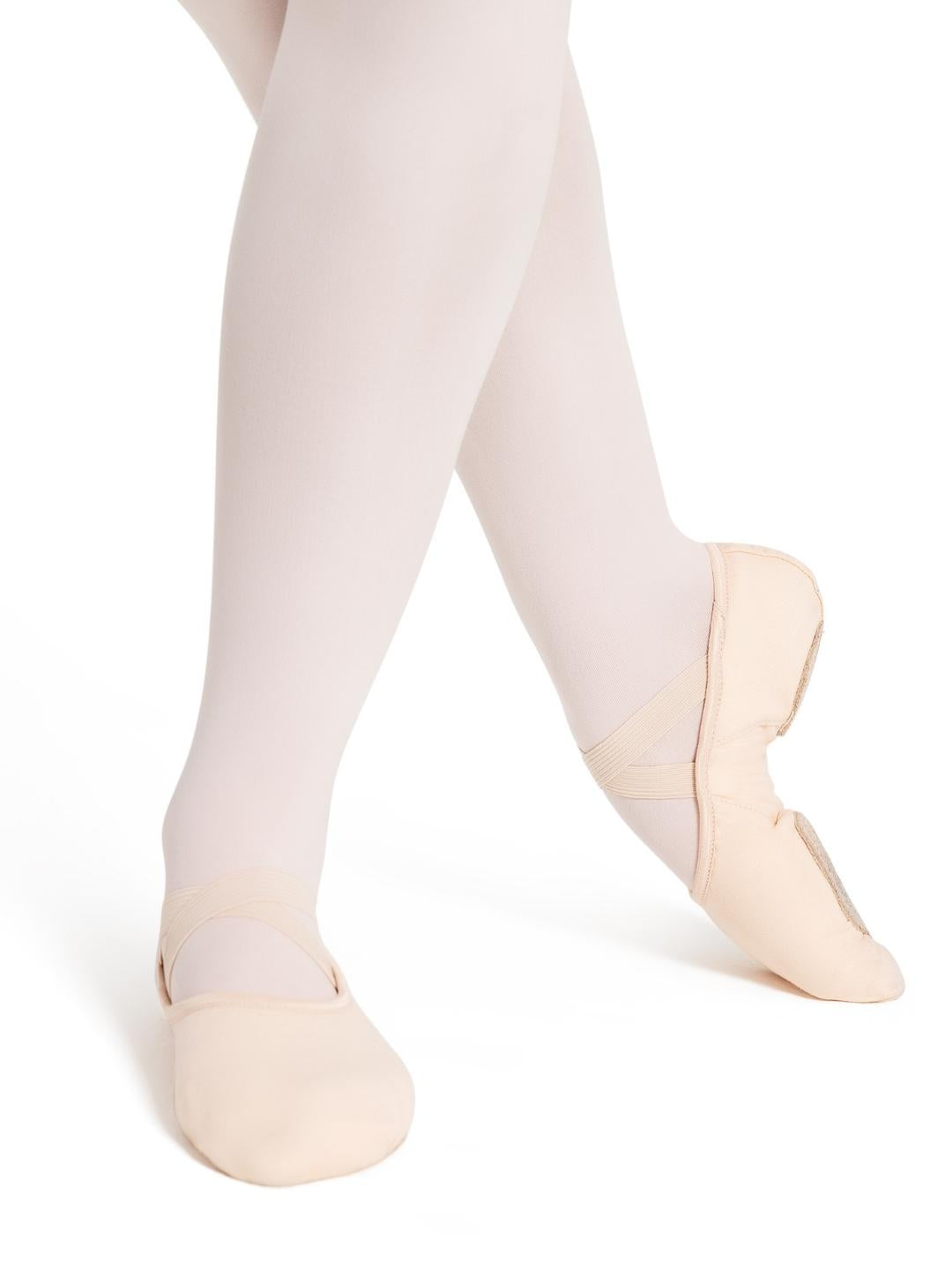


Convertible vs footed tights for kids is one of the most common questions dance parents ask. It sounds simple, but get it wrong and you are dealing with slipping heels, bunched fabric, or a child who cannot get their tights on without help. This guide cuts straight to what matters so you can buy with confidence.
What Is the Difference Between Convertible and Footed Tights?
Both styles cover the leg fully. The difference is at the foot.
- Footed tights have a full foot, covering the heel, sole, and toes. The fit is smooth and neat inside a ballet or jazz shoe.
- Convertible tights have a small opening on the sole, usually centred under the arch. You can fold the fabric up over the foot for a footed look, or roll it back to leave the foot bare.
That opening is the whole point. It gives dancers the flexibility to switch between bare feet and a covered leg in seconds, without changing tights.
When Footed Tights Are the Better Choice
Footed tights suit younger dancers well. Toddlers and preschoolers in their first ballet classes benefit from the full foot coverage. It keeps the tight in place, reduces bunching at the ankle, and means one less thing to fidget with during class.
They also work well for:
- Ballet classes where soft ballet shoes are worn throughout the full lesson.
- Performances where a neat, uniform look matters.
- Children who find convertible openings uncomfortable or confusing.
The fit is the key thing to get right. A footed tight that is too short will pull down at the waist and cause the heel seam to sit mid-foot. Size up if your child is between sizes. Check our guide on buying dance tights and socks online in Australia for more detail on sizing by age and height.
When Convertible Tights Are the Better Choice
Convertible tights are the most versatile option for school-aged dancers. Most dance schools in Australia list them as the preferred style from around age six onwards, and for good reason.
They suit:
- Contemporary and lyrical dance, where bare feet on the floor are standard.
- Mixed classes where a dancer moves between bare feet and shoes in the same lesson.
- Tap classes that use lace-up shoes, where a footed tight can bunch inside the shoe.
- Older dancers who are particular about foot hygiene and prefer to remove the tight entirely over the foot.
The opening also makes getting the tight on much faster. For a seven year old dressing herself before class, that matters.
How to Wear Convertible Tights Correctly
Pull the tight on fully, then reach through the opening and fold the flap up over the heel if a footed look is needed. The seam should sit flat against the arch, not bunched at the toe. If the fabric twists or the opening migrates toward the ankle, the tight is likely too small.
Getting the Right Fit: Practical Sizing Tips
Dance tights size differently from everyday tights. Most brands size by height and weight rather than age. Always check the brand chart, not just the age label on the packet.
- If your child is tall for her age, go by height first.
- If she is between sizes, size up. A tight that is slightly long can be folded at the waist. One that is too short causes constant adjusting and discomfort.
- For footed tights, check where the heel seam sits. It should land at the back of the heel, not mid-foot.
- For convertible tights, the arch opening should sit under the arch, not near the ball of the foot.
Colours matter too. Most Australian dance schools specify ballet pink, theatrical pink, or skin tone tights depending on the style. Check your school's uniform requirements before ordering. If you are unsure, ballet pink is the most common starting point for classical styles. You can browse our full range of dance tights and socks filtered by colour and style to find exactly what your school requires.
Which Style Do Most Dance Schools Recommend?
This depends on the school and the discipline. Ballet-focused schools often require footed tights for younger grades and transition to convertible from about Grade 2 or equivalent. Contemporary and musical theatre programmes tend to go straight to convertible.
When in doubt, ask the teacher before you buy. A quick message or phone call saves you returning a product that cannot be exchanged once opened.
If the school has no preference, convertible tights are the practical choice for most children aged six and up. They cover more situations without needing two separate pairs.
A Quick Summary Before You Buy
- Footed tights: best for younger dancers, ballet shoes, and performances requiring a neat finish.
- Convertible tights: best for older dancers, mixed classes, contemporary styles, and everyday flexibility.
- Always size by height and weight, not age.
- Check school requirements for colour and style before ordering.
Still working out what your daughter needs for her first year of dance? Our article on where to find quality dance tights online in Australia covers brands, fabrics, and what to look for at each price point. Shop our full selection of kids' dance tights to find the right fit for her style and school.


