
Contemporary & Lyrical Shoes Buying Guide: How to Choose the Right Footwear for Your Dance Style

Contemporary & Lyrical Shoes Buying Guide: How to Choose the Right Footwear for Your Dance Style

Finding the right footwear for contemporary and lyrical dance can feel overwhelming, especially with so many styles, materials and fits now available to Australian dancers. At Total Dance, we work closely with dancers and dance families every day, and one of the most common questions we hear is: how do I know which shoe is actually right for me? This guide is here to answer exactly that. Whether you are a dance parent shopping for your child's first lyrical class or an experienced dancer looking to upgrade your technique footwear, we have broken down everything you need to know to make a confident, informed choice.

What Makes Contemporary and Lyrical Shoes Different?

Before comparing specific styles, it helps to understand what separates contemporary and lyrical footwear from other dance shoes. Unlike ballet slippers or jazz shoes, contemporary and lyrical shoes are designed to allow maximum freedom of movement through the foot while still offering some protection and traction. The best options strike a careful balance between flexibility, grip, durability and comfort.

Key features to look for include:

  • Flexibility: The shoe should allow the foot to fully articulate, point and flex without restriction. A stiff sole defeats the purpose entirely.
  • Sole coverage: Some styles cover only part of the foot (such as the ball or heel), while others wrap the entire foot. Your choreography and teacher's preference will guide this choice.
  • Material: Canvas, leather and stretch fabric (often called compression fabric) each behave differently on the floor and feel different on the foot.
  • Fit: A snug, secure fit is essential. Loose footwear can shift mid-performance and affect balance during turns and leaps.
  • Traction vs. slide: Some styles allow for smooth sliding across sprung floors, while others provide more grip. Consider the flooring in your studio and performance space.

Comparing the Top Contemporary and Lyrical Shoe Options

Below we compare five popular styles available through our contemporary and lyrical range so you can weigh up the options side by side.

Hanami Canvas Pirouette Lyrical Shoes

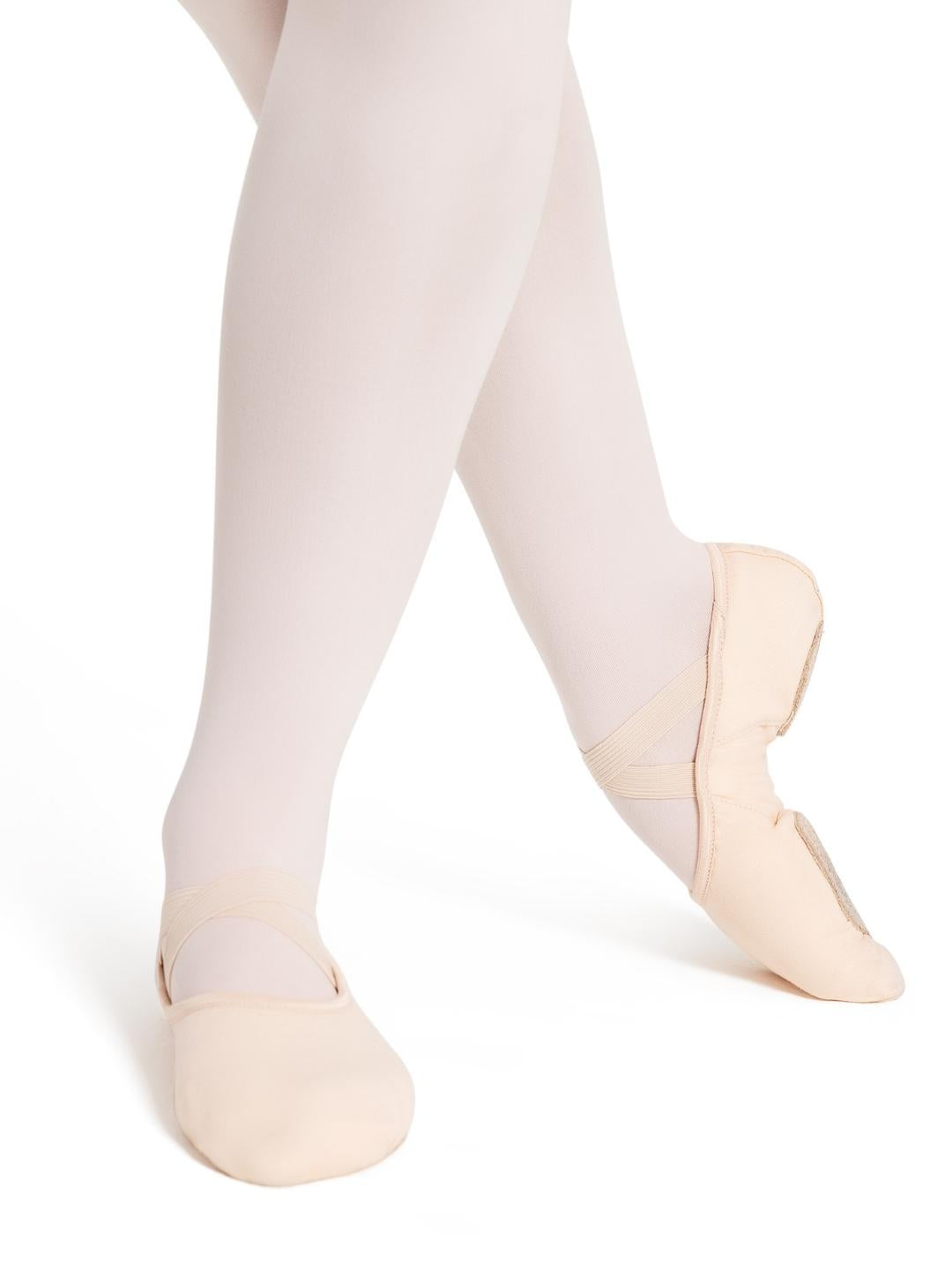
The Hanami Canvas Pirouette Lyrical Shoes are a favourite among dancers who want a soft, pliable shoe that moves beautifully with the foot. The canvas upper is lightweight and breathable, making it a comfortable choice for long rehearsals. Canvas conforms to the shape of the foot over time, offering a personalised fit that feels almost like a second skin. These shoes are well suited to lyrical styles where foot articulation and clean lines are priorities. Canvas does require a little more care than leather, as it can mark or scuff more easily, but many dancers prefer the aesthetic of a clean canvas shoe on stage.

Barely There footUndeez Spin with Ease for Contemporary Dance

If your style calls for bare-foot aesthetics with a little protection and spin support, the Barely There footUndeez Spin with Ease for Contemporary Dance is worth serious consideration. These half-sole pads sit under the ball of the foot and leave the heel and toes free, giving the appearance of bare feet while reducing friction burns and protecting the skin during pirouettes and across-the-floor combinations. They are particularly popular in contemporary classes where the choreography alternates between grounded, floor-based movement and more elevated technique. For dancers who are transitioning from fully bare feet, these offer a gentle, practical introduction to footwear.

Leather Pirouette Lyrical Shoes

The Leather Pirouette Lyrical Shoes offer greater durability than canvas alternatives and tend to hold their shape well over a full season of classes and performances. Leather has a natural suppleness that, once broken in, moulds to the foot and provides excellent support through the arch. These shoes are a strong choice for dancers with wider feet or those who prefer a structured feel underfoot. They are also easier to spot-clean than canvas, which is a practical consideration for busy dance families. The slightly firmer sole can feel more substantial during turns, which some dancers find reassuring.

Exo Lyrical Compression Foot Glove

The Exo Lyrical Compression Foot Glove represents a more technical approach to lyrical footwear. Made from a compression fabric, this style wraps the entire foot in a close-fitting glove that enhances the line of the foot while supporting the arch and instep. The compression fit helps reduce fatigue during extended rehearsals and creates a sleek, polished look that photographs and films beautifully. This option is particularly popular for performance and competition, where visual presentation of the foot line is closely judged. Because the fit is so precise, it is important to measure your foot carefully and consult the size guide before ordering.

EXO Compression Foot Glove Contemporary Shoes

The EXO Compression Foot Glove Contemporary Shoes are closely related to the lyrical version but are designed specifically with contemporary movement in mind. Contemporary dance often involves more extreme floor work, contact improvisation and weight-bearing on unusual parts of the foot. This shoe accommodates that with a construction that protects without restricting. The compression fabric is durable enough to handle the demands of contemporary choreography while remaining lightweight. Dancers who move between lyrical and contemporary disciplines in the same season may find this versatile option serves them well across both styles.

How to Choose the Right Shoe for Your Foot Type and Technique

Knowing what is available is only part of the equation. Choosing the right shoe also means understanding your own foot and what your dance training requires. Here is a practical framework to guide your decision.

Consider Your Foot Shape

Dancers with a narrow foot often find canvas or compression styles fit most securely, as these materials hug the contours of the foot without excess fabric bunching at the sides. Dancers with a wider or more voluminous foot may prefer the leather option, which offers more structured room without feeling loose. If you are in between sizes, it is generally better to size down in compression footwear, as the fabric has enough stretch to accommodate without becoming uncomfortably tight.

Think About Your Technique Priorities

Are you focused on building clean pirouette technique? A full-sole shoe like the canvas or leather pirouette options provides more surface contact and consistent spin support. Are you primarily working on floor sequences and contemporary pathways? A half-sole or footUndeez style allows greater freedom and versatility across different floor surfaces. If performance presentation is a priority, the Exo compression styles deliver a refined, streamlined aesthetic that works well under stage lighting.

Assess the Flooring in Your Studio

Not all studio floors are the same. Sprung timber floors behave differently from vinyl or Marley surfaces. Some shoes offer more slide, which is ideal for turns, while others grip the floor more firmly, which suits styles with a lot of directional changes. If possible, ask your teacher what surface your performances will be held on and factor that into your choice. Many dancers keep two pairs for different environments.

Factor in Your Budget and Expected Wear

Canvas and compression styles are generally more affordable, making them a sensible starting point for younger or newer dancers. Leather shoes tend to cost a little more but last significantly longer, which can make them better value over a full dance year. For competition and performance-focused dancers, investing in a quality compression glove that photographs well may be worth the additional outlay.

You can compare all available options and filter by size and style when you shop our full footwear collection here.

Care and Maintenance Tips for Longevity

Whichever style you choose, proper care will extend the life of your footwear and keep it looking its best.

  • Canvas shoes can often be hand-washed in cool water with a gentle detergent. Air dry flat and away from direct sunlight to prevent shrinkage or warping.
  • Leather shoes should be wiped down with a damp cloth after each wear. A light application of leather conditioner a few times per season will keep the material supple and prevent cracking.
  • Compression foot gloves should be hand-washed or placed in a mesh laundry bag for machine washing on a gentle, cold cycle. Avoid tumble drying, as heat can compromise the stretch fibres.
  • Store all footwear in a breathable bag (not a sealed plastic bag) to allow air circulation and prevent odour build-up.
  • Rotate between two pairs where possible so each pair has time to air out between wears.

Frequently Asked Questions

What is the difference between a pirouette shoe and a foot glove?

A pirouette shoe (such as the canvas or leather options listed above) typically covers the full foot with a sole that includes a small turning pad or suede spot under the ball of the foot to assist with spins. A foot glove (such as the Exo compression styles) wraps the foot in a close-fitting fabric sleeve with a thin sole, prioritising the visual line of the foot and freedom of movement over specific spin support. The right choice depends on your technique focus and your teacher's recommendation.

Can my child wear the same shoe for both lyrical and contemporary classes?

In many cases, yes. The footUndeez and EXO Compression Foot Glove Contemporary Shoes in particular are designed to be versatile across lyrical and contemporary disciplines. However, some studios have specific footwear requirements for each style, so it is always worth checking with your teacher before purchasing a single pair for multiple classes.

How do I know if I have ordered the right size?

Most contemporary and lyrical shoes are sized to fit snugly. When trying on or sizing at home, the shoe should feel firm but not painful, with no excess fabric wrinkling at the toe or sides. Compression styles especially should feel close-fitting from the moment you put them on, as they will soften slightly with wear but will not stretch significantly. If you are between sizes, sizing down is generally recommended for compression footwear. Check the size guide on each product page and, if in doubt, reach out to the Total Dance team for personalised advice.

Are contemporary shoes suitable for outdoor performances?

Contemporary and lyrical shoes are designed for studio and stage use on appropriate dance flooring. Wearing them outdoors on rough or abrasive surfaces will significantly reduce their lifespan and may damage the sole. If your performance involves any outdoor elements, speak to your teacher or choreographer about appropriate footwear for that context.

Choosing the right footwear is one of the most important decisions a dancer or dance family can make, and it is one that deserves careful thought rather than a quick guess. We hope this guide has given you a clear picture of the options available and the confidence to choose the style that best suits your technique, foot type and dance goals. Browse our full selection of contemporary and lyrical footwear and do not hesitate to contact the Total Dance team if you have questions. We are always here to help you find the perfect fit.