
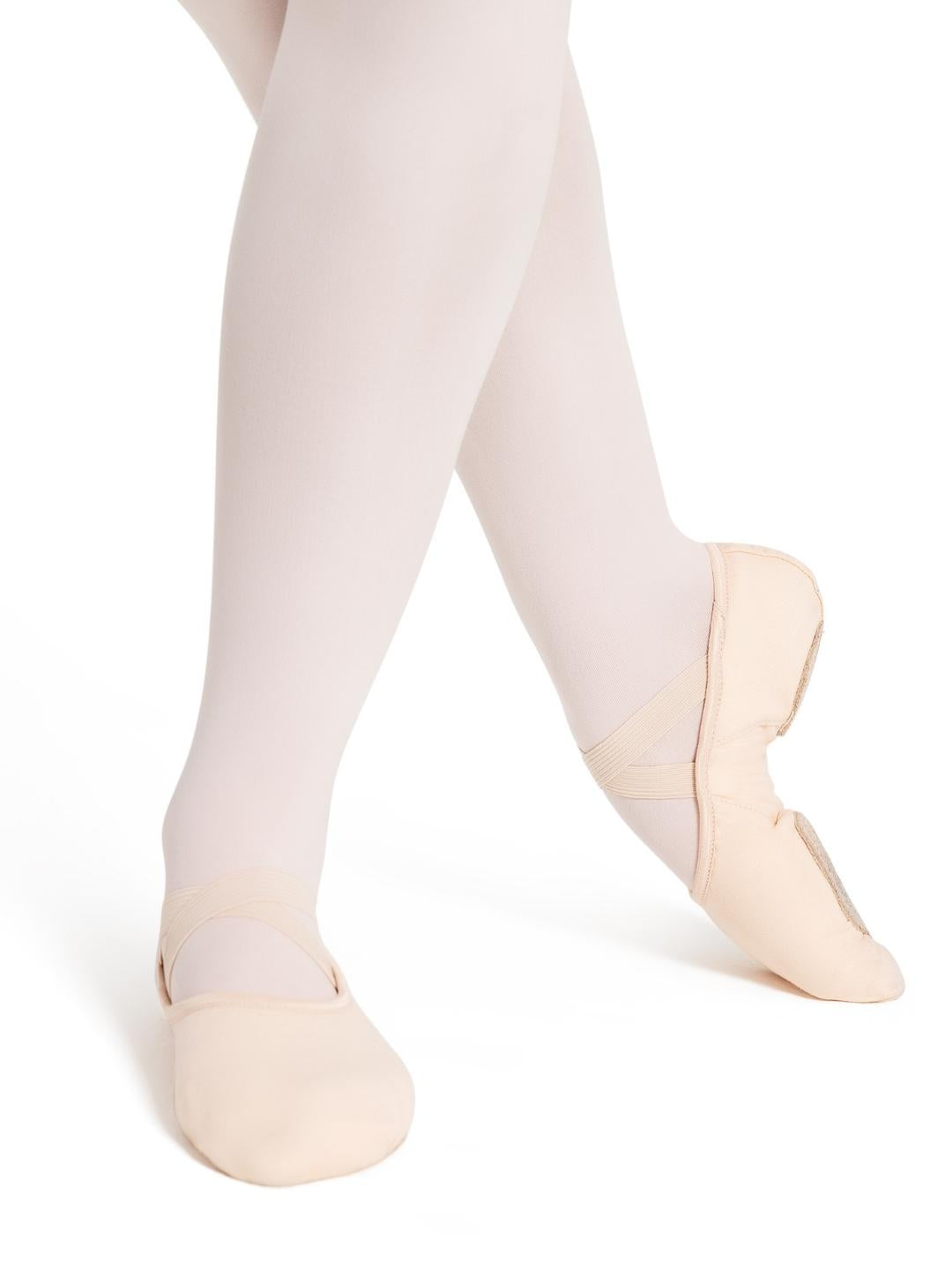


Finding quality ballet shoes and dancewear under $50 in Australia is genuinely possible. You just need to know what to look for. Growing dancers need new shoes every few months, so spending smart matters more than spending big.
What to Look for in Ballet Shoes Under $50
Not all budget ballet shoes are equal. These are the features worth checking before you buy.
Sole Type
Split soles give better arch articulation. They suit intermediate dancers who need to see a full pointed foot. Full soles offer more support and are better for beginners and young children still building foot strength.
Material
Canvas is the most practical choice for growing feet. It breathes well, washes easily, and holds its shape through regular classes. Leather moulds to the foot over time and tends to last longer, but it costs more and needs more care. For most children doing weekly classes, canvas is the smarter buy.
Fit and Sizing
Ballet shoes should fit snugly but not tight. There should be no excess fabric bunching at the toes. Most brands run small, so size up half a size if your child is between sizes. Elastic should sit flat across the instep without digging in. Always measure both feet and fit to the larger one.
- Measure feet in the afternoon when they are at their largest
- Allow no more than a thumbnail of growing room
- Check that the drawstring or elastic can be adjusted
- Ask your dance teacher which sole type your syllabus requires
Choosing Dancewear That Lasts Without the Big Price Tag
Leotards, tights, and skirts take a beating in weekly classes. You need pieces that survive stretching, sweat, and frequent washing without losing their shape or colour.
Leotards
Look for a nylon and elastane blend. It holds its shape, dries quickly, and keeps colour wash after wash. Avoid anything labelled only as polyester with no elastane content. It will lose stretch faster. Check seam placement too. Flatlock seams sit flat against the skin and reduce irritation during long classes.
Australian leotard sizing generally follows age and height rather than body weight. A size 8 leotard suits a child around 128 to 134 cm tall. When in doubt, check the brand's size chart and go by height first.
Tights
Dance tights need to be durable at the knee and seat. Footed tights are standard for ballet. Convertible tights work well for styles like jazz or contemporary where bare feet or half-foot coverage is needed. Look for a reinforced gusset. It extends the life of the tight significantly.
Skirts and Shorts
Chiffon skirts are lightweight and flow well for ballet and contemporary. Cotton or jersey shorts suit jazz and hip hop. Both are easy to find in our dancewear under $50 range without compromising on quality.
How to Get More Value From Your Dancewear Budget
A little care goes a long way. These habits keep dancewear looking good longer.
- Wash leotards and tights inside out in cold water on a gentle cycle
- Air dry rather than tumble dry to protect the elastane fibres
- Store ballet shoes in a mesh bag so they can breathe between classes
- Rotate between two pairs of tights if your dancer attends multiple classes per week
- Hand wash canvas ballet shoes or use a pillowcase in the machine on a cold, gentle cycle
Buying two or three well-chosen basics from our affordable dancewear collection will serve most dancers better than one expensive piece used every day. Think about what your dancer actually wears to class each week and build from there.
When to Replace Ballet Shoes
Shoes that no longer fit properly affect technique and can cause injury. Check the fit every six to eight weeks for children under ten. Signs it is time to replace include toes pressing against the front, the drawstring pulling tight even when fully loosened, or the sole separating at the seam.
For recreational dancers attending one or two classes a week, a good canvas shoe from our budget-friendly dancewear options should last a full school term before needing replacement.
Spending under $50 does not mean settling. It means choosing the right pieces for where your dancer is right now in their training, and replacing them when the time is right.


