
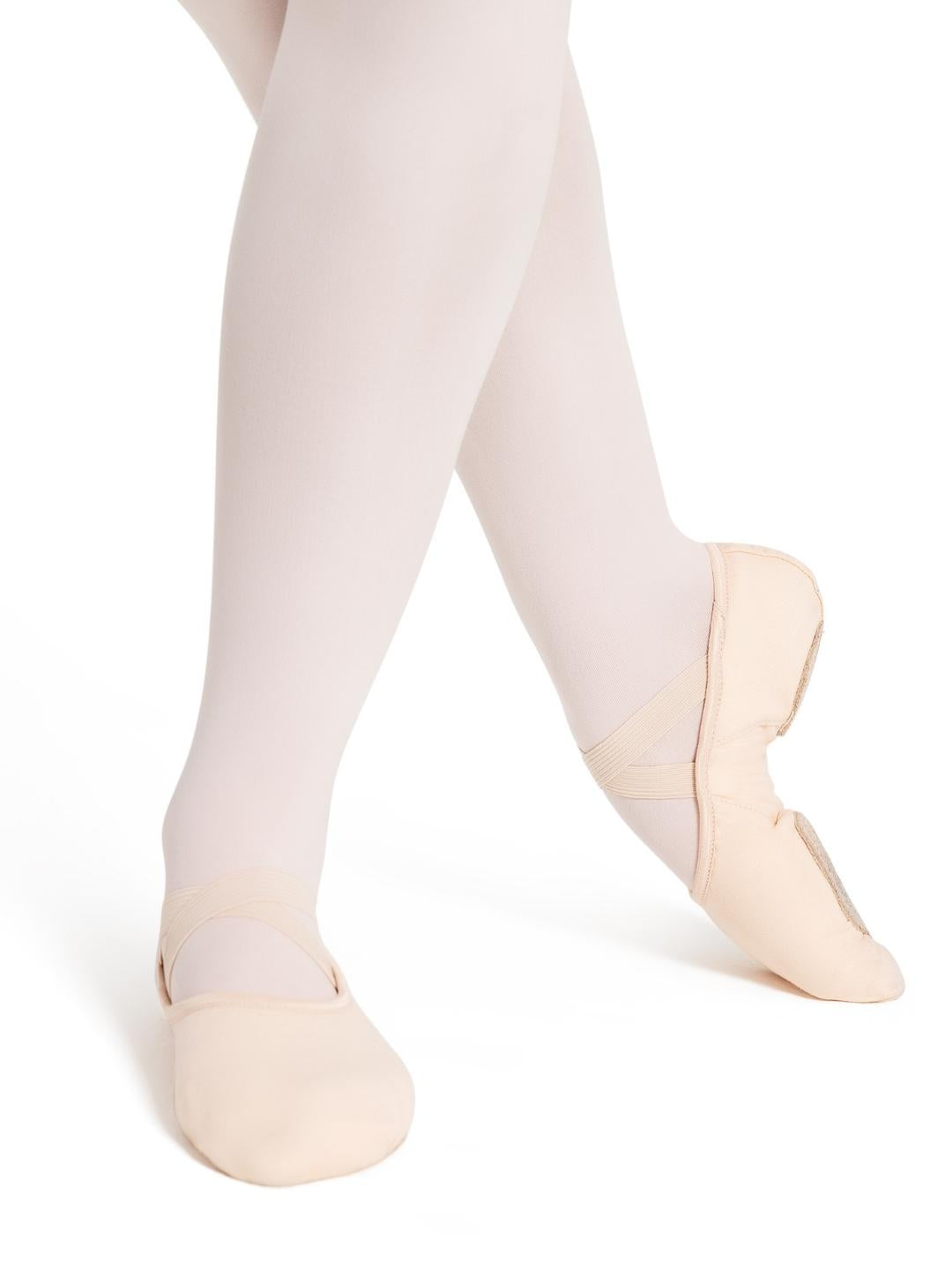


Picking the right leggings for ballet class sounds simple. It is not. The wrong waistband rolls down mid-plié. The wrong fabric pills after three washes. The wrong length cuts the line of the foot in centre work. Here is what to look for, and why it matters.
Why the waistband makes or breaks ballet leggings
Ballet class is full of changes in body angle. Pliés, ports de bras, floorwork. A narrow elastic waistband bunches and rolls through all of it. A wide, flat waistband stays put and sits smoothly under a leotard.
If your daughter is constantly tugging at her waistband during class, her leggings are getting in the way of her training. Look for a waistband that is at least 5 cm wide. Fold-over waistbands work well for younger dancers because they adjust easily as the body moves.
Avoid waistbands with visible seams on the inside. They dig in during floorwork and leave marks on the skin after a long class.
Fabric choices for ballet class leggings
Fabric is where most parents make the wrong call. Soft cotton feels nice off the rack but it stretches out of shape quickly and does not recover well. For ballet, you want a fabric with strong recovery so the leggings hold their shape through the full class.
Nylon and Lycra blends
This is the most common fabric in quality dance leggings. Nylon gives durability. Lycra gives stretch and recovery. A blend of around 80 percent nylon and 20 percent Lycra is a reliable standard. The leggings move with the dancer, spring back after every stretch, and wash repeatedly without bagging at the knees.
Moisture-wicking fabrics
Older dancers and those in longer classes benefit from moisture-wicking fabric. It pulls sweat away from the skin and keeps the dancer comfortable through a 90-minute session. Polyester-Lycra blends do this well. Bamboo fabric is another option, known for being soft, breathable and silky against the skin.
You can browse our fabric range to compare options before buying.
What to avoid
- 100 percent cotton. It pills, loses shape and holds moisture.
- Heavyweight jersey. Too stiff for floor exercises and grands battements.
- Sheer or thin fabric. Shows through under stage lighting and wears out fast.
Getting the length and fit right
Length matters more in ballet than in any other dance style. The teacher and examiner need to see the line of the leg clearly. A legging that ends mid-calf can interrupt that line during centre work.
Full-length leggings that sit at the ankle are the most versatile. They work for barre and centre work and keep the muscles warm. Stirrup leggings are a strong choice for older students. The stirrup holds the legging in place under the foot and keeps the ankle line clean.
Cropped leggings ending just below the knee are generally not suited to classical ballet class. They are fine for contemporary or jazz but can look untidy in a ballet setting.
Sizing for growing dancers
- Check the size chart for the specific brand, not just age guides. A 10-year-old dancer with long legs may need a size 12 length.
- Leggings should sit flat on the hip with no gaping at the waistband when the dancer bends forward.
- There should be no pulling at the knees or ankles in a standing relevé.
- A little room for growth is fine. More than 3 cm excess length causes bunching that the teacher will notice.
Colour and studio requirements
Most Australian ballet schools specify colours in their uniform policy. Black is by far the most common requirement for leggings. Some schools allow navy or charcoal for junior students.
If the school has no set colour policy, black is the safest choice. It photographs well, shows the leg line clearly and stays looking neat across a full term of classes.
Check the school handbook before you buy. Buying the wrong colour is a common and avoidable mistake.
How to make ballet leggings last
- Wash in cold water on a gentle cycle.
- Turn inside out before washing to reduce pilling on the outer surface.
- Hang to dry. Dryer heat breaks down Lycra fibres faster than anything else.
- Do not use fabric softener. It coats the fibres and reduces stretch recovery over time.
Treated well, a quality nylon-Lycra legging should last a full dance year with multiple washes per week.
Where to start shopping
The best leggings for ballet class combine a wide flat waistband, strong Lycra recovery, full-length or stirrup cut, and the correct colour for the studio. That combination is not hard to find once you know what to look for.
Our dancewear fabric collection includes options suited to all levels, from beginner students to seniors preparing for examinations. If you are unsure which fabric suits your dancer best, shop here and use the filters to narrow by fabric type and length.


