

Bloch and Capezio are the two most trusted names in ballet shoes. Both are worn at every level, from first-class beginners to professional performers. But they fit differently, feel different on the foot, and suit different foot shapes. Knowing which one works for your dancer saves time, money, and frustration.
How Bloch and Capezio Ballet Shoes Differ
The core difference comes down to fit and construction. Bloch shoes tend to run narrower through the toe box and have a snugger overall fit. Capezio shoes are generally wider and roomier, especially across the ball of the foot.
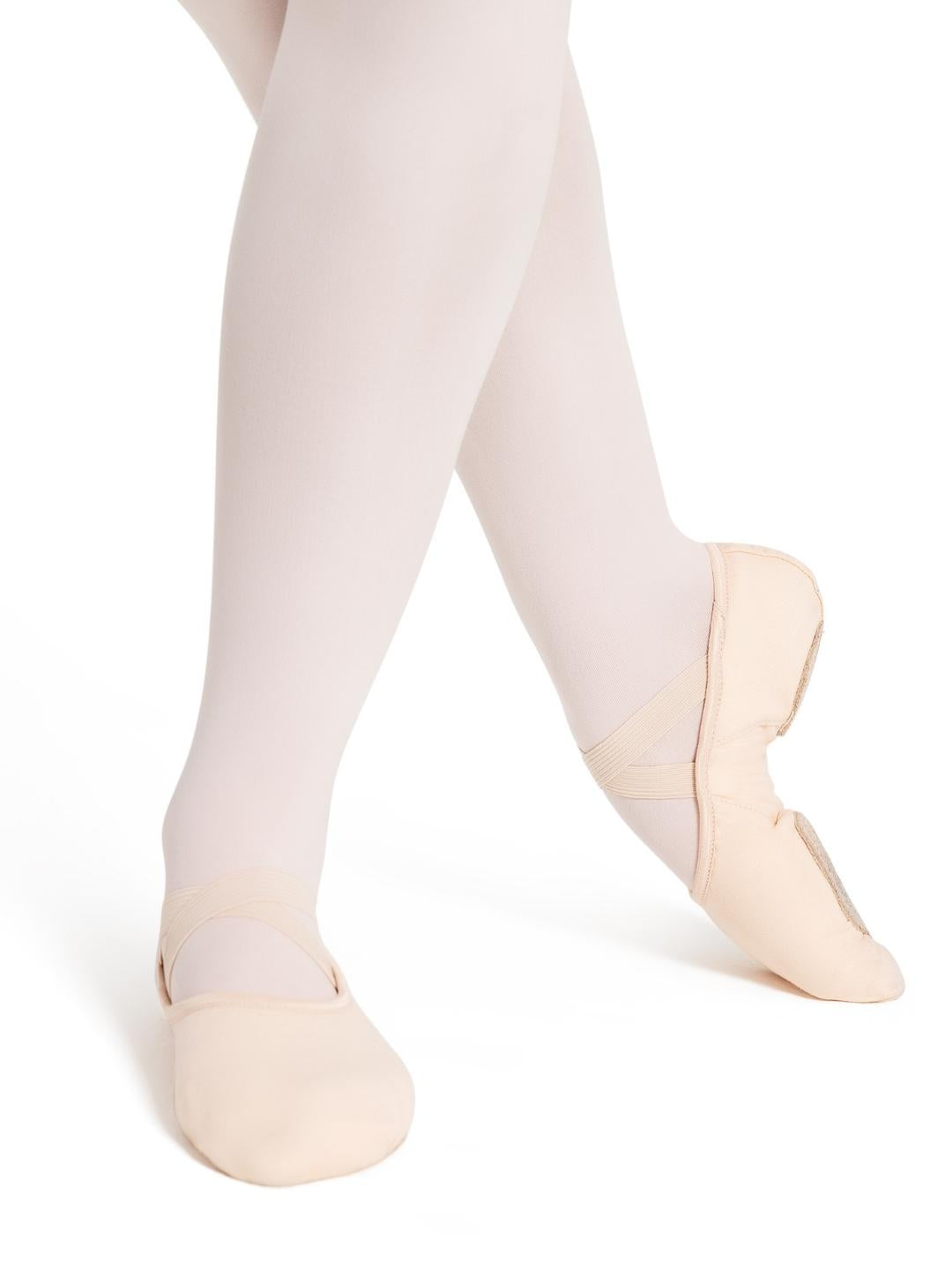
Both brands make leather and canvas styles. Leather holds its shape longer and moulds to the foot over time. Canvas is lighter, more flexible, and often the preferred choice for younger students who need to develop foot strength. If you are buying online, our complete guide to buying ballet shoes online in Australia walks through exactly what to look for before you add to cart.
Choosing by Foot Shape
Foot shape is the single most important factor in this decision. Get this right and the shoe does its job. Get it wrong and you will be back shopping within weeks.
Bloch suits these foot types
- Narrow to medium width feet
- Feet with a tapered or Egyptian toe shape (big toe longest)
- Dancers who prefer a close, precise fit around the heel
- Students whose feet sit well in a snug shoe without pinching
Capezio suits these foot types
- Medium to wide width feet
- Feet with a square or Greek toe shape (second toe equal to or longer than big toe)
- Dancers who have found Bloch styles feel compressed across the toes
- Students with a higher instep who need a little more room through the vamp
If your dancer is between sizes or has one foot slightly larger than the other, always fit to the larger foot. A shoe that is slightly generous is easier to manage than one that binds.
Bloch vs Capezio: Key Models Worth Knowing
Both brands have a core model that most teachers recommend for beginners and a step-up option for more advanced students.
Bloch Dansoft
The Dansoft is Bloch's most popular beginner shoe. It is a full-sole leather ballet shoe with a soft, supple upper. The drawstring is pre-elasticated, which makes it easier for young dancers to put on independently. The fit is narrow, so size up half a size if your dancer has a wider forefoot.
Bloch Prolite II
A split-sole canvas shoe suited to intermediate and advanced students. The split sole gives a clean line through the arch and allows the foot to work more freely. Runs true to size for most narrow to medium feet.
Capezio Daisy
The Daisy is Capezio's go-to beginner shoe. Full sole, leather, and roomier through the toe box than the Dansoft. Ideal for younger students with wider or fleshier feet. The elastic is often pre-sewn, which parents appreciate.
Capezio Juliet
A split-sole canvas option for intermediate students. Offers more volume through the midfoot than Bloch's equivalent. A reliable choice for dancers who have grown out of a full-sole shoe and need a style that accommodates a broader foot.
Sizing: What the Brands Recommend
Neither brand maps directly onto standard Australian street shoe sizes. Both recommend measuring the foot in centimetres and converting using the brand's own size chart. Bloch uses a numeric sizing system. Capezio uses a combination of numeric sizes and width fittings.
For younger students, most teachers advise leaving no more than a thumbnail's width of growing room. Too much extra space affects how the foot works through the shoe and can create instability at the barre. If you are unsure about sizing conventions, our buying guide covering fit and sizing for dancers across Australasia covers this in detail, including how sizing translates across brands and age groups.
Which Brand Do Teachers Prefer?
Most Australian dance teachers do not strongly favour one brand over the other. What they care about is correct fit. A well-fitting Capezio will always outperform a poorly fitting Bloch, and vice versa.
That said, many studios in Australia specify a brand in their uniform requirements. Check with your teacher before purchasing. If no preference is given, base the decision entirely on foot shape and width.
Canvas is generally recommended over leather for students doing exams or eisteddfods where the foot line is closely assessed. Leather remains a practical choice for very young beginners and for dancers in classes with a lot of floor work.
Where to Find Both Brands
You can browse both Bloch and Capezio styles in our full ballet shoes range, with options across beginner, intermediate, and advanced levels. Sizes run from toddler through to adult, in leather and canvas, full sole and split sole.
If you are still weighing up the options, read the size guide on each product page carefully. When in doubt, order both and return the one that does not fit. Getting the right shoe from the start makes a real difference to how a dancer feels at the barre.


