


Your footwear choice for barre or yoga is not minor. It directly affects your grip, balance and technique. Grip socks versus studio shoes is a genuine decision, and the right answer depends on your class format, floor surface and how your foot moves through each exercise. Here is what you need to know before you buy.
What Are Your Actual Options?
There are two main footwear categories for barre and yoga. Understanding how each one works makes the choice straightforward.
Grip Socks
Grip socks look like regular socks but have rubberised dots or patterns on the sole. Those grip pads prevent your foot from sliding on smooth timber, laminate or vinyl studio floors. Most grip socks also have a toeless or open-toe design, which matters for yoga poses where your toes need to spread and press into the floor. They are lightweight, easy to pack and wash, and work with almost any studio dress code.
Studio Shoes
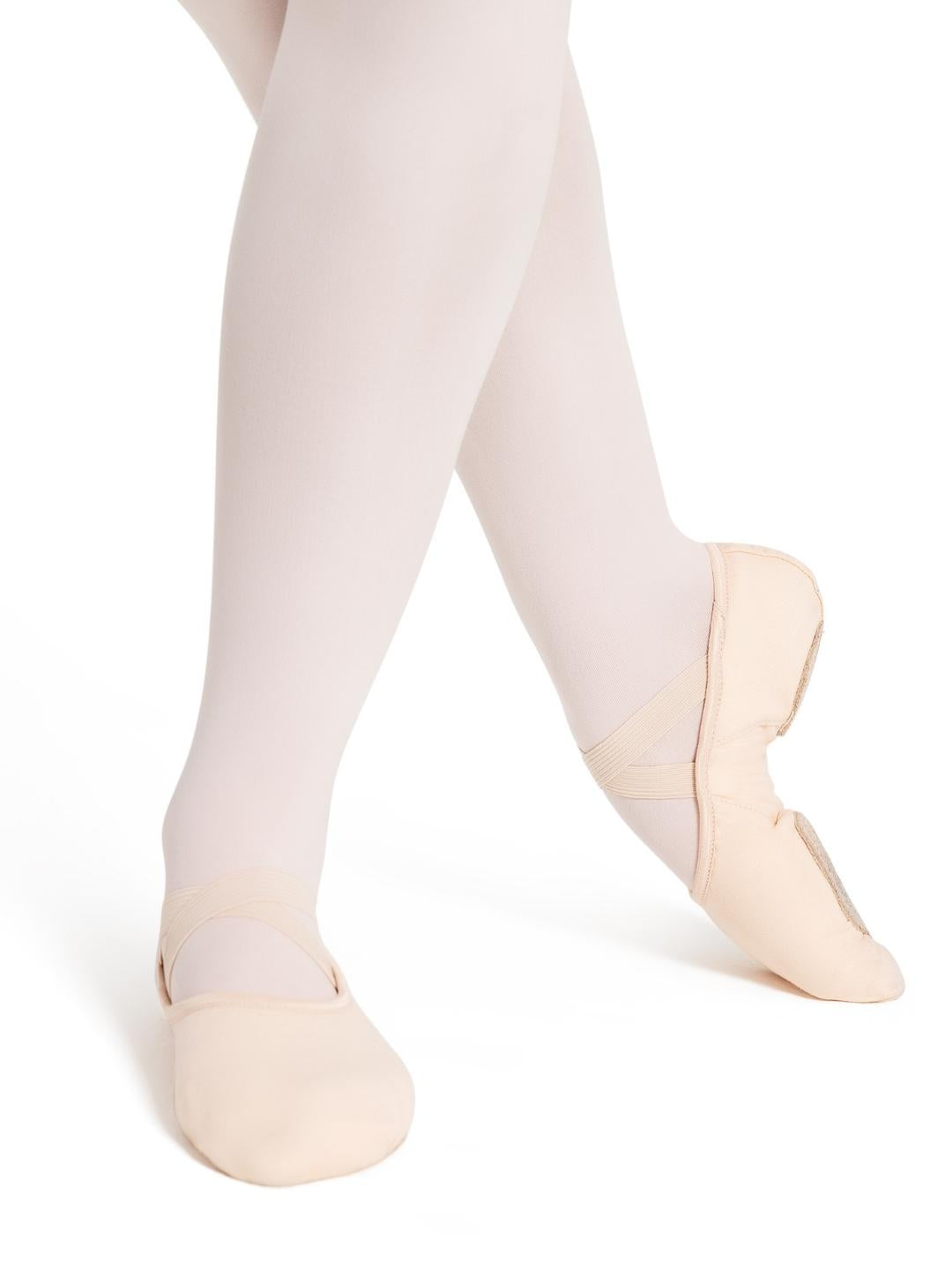
Studio shoes, sometimes called barre shoes or split-sole flats, wrap the foot more fully. They typically have a leather or canvas upper with a suede or rubber split sole. That split sole allows your arch to flex naturally through a demi-pointe, which is important for barre work specifically. Some styles have a small rubber pod under the ball of the foot and heel only, leaving the arch free. They offer slightly more foot support than a sock alone and give a polished, uniform look in class.
Grip Socks vs Studio Shoes for Barre and Yoga: Key Differences
Both options serve a purpose. The differences come down to a few practical factors.
- Floor surface. Grip socks perform well on smooth sealed floors. Studio shoes suit a wider range of surfaces, including sprung timber floors that can feel less grippy underfoot.
- Foot articulation. Barre requires you to rise through demi-pointe repeatedly. A split-sole studio shoe supports that movement cleanly. A grip sock allows full foot flex but offers no structured support through the arch.
- Yoga versus barre. Yoga teachers and practitioners generally prefer toeless grip socks or bare feet. Full contact with the mat is part of the practice. Barre classes are more likely to welcome or require studio shoes, especially in professional or performing arts settings.
- Hygiene. Shared studio floors carry bacteria and fungi. Both grip socks and studio shoes provide a barrier. Grip socks are machine washable after every class. Studio shoes need airing and occasional spot cleaning.
- Cost. Grip socks are the lower entry point. A quality pair sits between $15 and $30. Studio shoes range from around $35 to $80 depending on the brand and material.
How to Choose Based on Your Class Type
If you are doing hot yoga or vinyasa flow, grip socks or bare feet are the standard. Mat grip matters most and a sock with rubberised coverage on the sole keeps you stable through transitions. Toeless styles are popular because they allow your toes to grip the mat surface directly.
If you are in a barre class, particularly one that includes pointe-relevant conditioning or uses a sprung timber floor, a split-sole studio shoe gives you better support and looks more appropriate. Many barre studios list studio shoes in their uniform requirements, so check with your studio before purchasing.
If you move between both disciplines, grip socks are the more versatile choice. A good pair handles barre fundamentals and yoga equally well, and they take up almost no space in a dance bag.
You can browse our full range of barre and yoga footwear to compare grip sock styles and studio shoe options side by side. For more guidance on what to look for in each category, the barre and yoga shoes buying guide covers fit, sole type and brand differences in detail.
Sizing and Fit Tips
Grip socks generally size like regular socks. Most brands use small, medium, large sizing based on foot length in centimetres. If you are between sizes, size up. A sock that is too small will bunch under the ball of your foot and reduce grip contact.
Studio shoes should fit snugly with no excess fabric across the toe box. Unlike street shoes, they do not need break-in room. The sole should sit flush with your foot when you rise through demi-pointe. If the sole buckles or the heel gaps, try a half size down or a narrower fit option.
For children, check sizing every six months. Feet grow quickly and a studio shoe that is too small will restrict natural foot movement and arch development.
Which One Is Right for You?
For yoga, start with toeless grip socks. For barre, check your studio's dress code first. If they permit either, a split-sole studio shoe gives you more foot support and longevity. If you are new to barre and not yet sure you will commit, grip socks are a practical and affordable first step.
The most important thing is that your foot is stable and your toes can respond to the floor beneath them. Slipping mid-exercise is not just frustrating, it disrupts technique and increases injury risk. Good footwear removes that variable entirely.


