
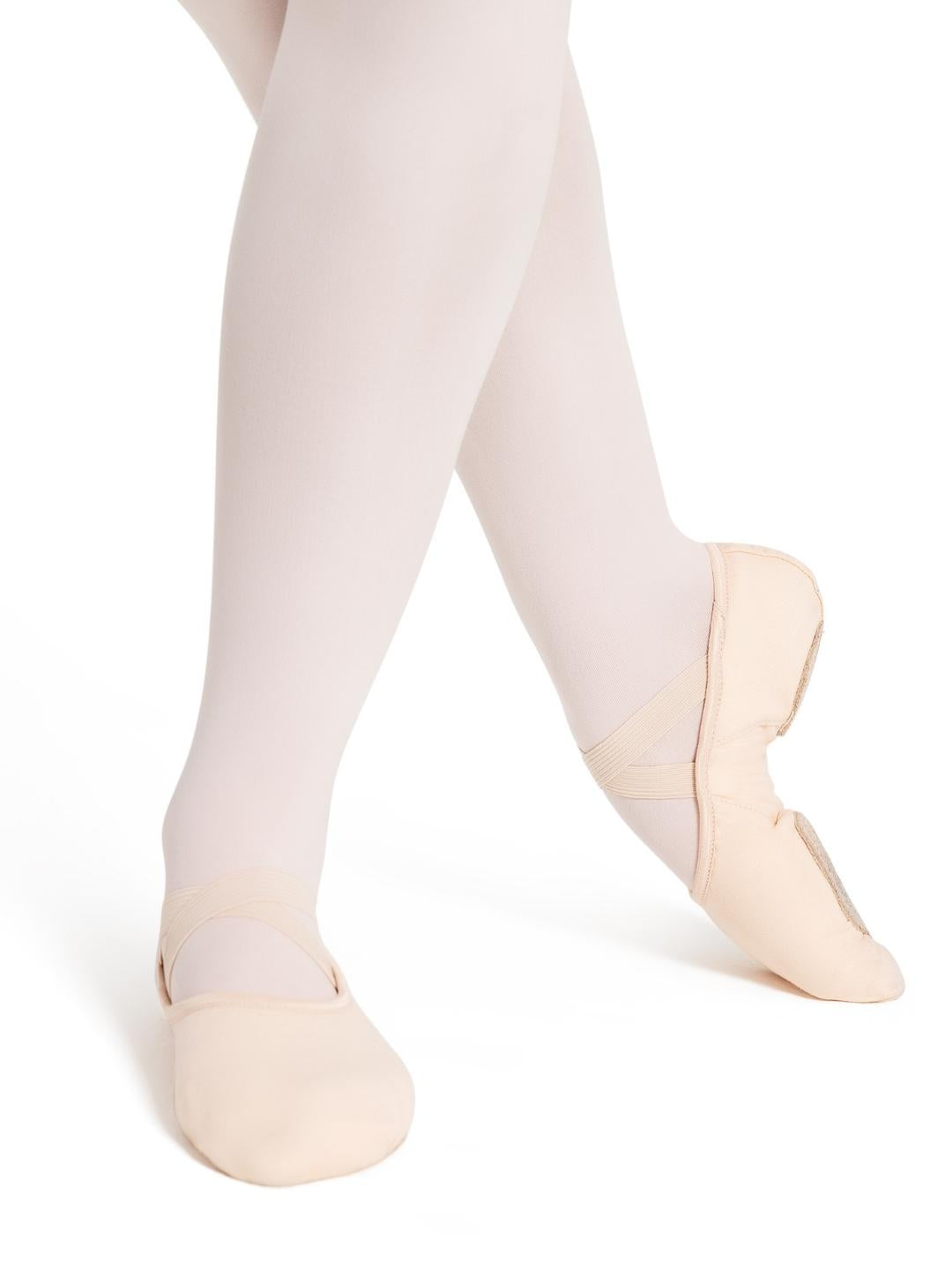


If you have ever stood at our counter holding three near identical packets wondering what on earth footed, convertible and stirrup actually mean, you are in very good company. It is one of the most common questions we get, and the good news is that once you know what each type does, choosing the right pair for your dancer takes about ten seconds. Let me walk you through it the way I would across the counter.
The four types of dance tights
They all do the same job (a smooth, neat line from waist to toe) but they finish differently at the foot, and that little difference is what matters.
- Footed: a full foot, just like everyday tights. The classic choice for ballet, especially for younger dancers and formal class.
- Convertible: a small opening at the ball of the foot, so they roll up to bare the foot and roll back down again. The most versatile and by far our most popular style.
- Stirrup: a loop that sits under the arch while the heel and toes stay bare. A nice middle ground that keeps the leg line tidy with the foot mostly free.
- Footless: no foot at all, finishing at the ankle. Lovely for jazz, contemporary and warm ups where dancers want bare feet.
Which type suits which style
Here is the simple rule of thumb, though your teacher always has the final say.
- Ballet: footed or convertible. Younger grades often ask for footed; older dancers usually move to convertible so they can bare the foot for pointe.
- Jazz: footless or convertible, so the foot is free in jazz shoes or bare.
- Contemporary: footless, or convertible rolled up, for bare feet on the floor.
- Tap: usually footed under tap shoes, and often in black.
- Exams: boards can be quite specific, so please check the syllabus. Our exam uniform guide sets out what the main Australian boards tend to ask for.
Choosing the right colour
Colour trips people up more than the style does, but it follows the discipline.
- Ballet pink: the classic for ballet, and what most syllabus grades expect.
- Tan or suntan: the go to for jazz and contemporary, giving a clean line with jazz shoes or bare feet.
- Black: common for tap and some jazz, and often used for performances.
- White or navy: occasionally required by a particular studio or troupe.
Shades vary between brands, so if the exam or concert calls for an exact colour, bring your dancer in and we will match it against the pair on hand. When in doubt, always check with the studio or exam board before you buy.
A quick word on denier and care
Denier is simply the thickness of the fabric. A higher number means a thicker, warmer, more opaque tight, which suits winter class and dancers who like a bit of coverage. A lighter denier feels cooler and shows the line of the leg more, which many older dancers prefer for exams and stage. Neither is right or wrong, it comes down to warmth, coverage and what the studio expects.
- Wash gently. Cool water, a mild wash bag, and no fabric softener, which breaks down the stretch fibres.
- Skip the dryer. Heat is the enemy of elastane, so lay flat or hang to dry in the shade.
- Mind the nails. Trim fingernails and toenails before pulling tights on, as most ladders start there.
- Rotate pairs. Two pairs worn in turn last far longer than one worn every day, so buy a spare for concert season.
For the full routine, see our guide on how to wash dancewear.
Footed, convertible, stirrup and footless in the colours the syllabus asks for, ready to post or fit in store.
Shop dance tights Browse undergarmentsFrequently asked questions
What are convertible tights?
Convertible tights have a small opening at the ball of the foot, so your dancer can roll them up to bare the foot for pointe work or pedicures, then roll them back down to cover it again. That flexibility makes them the most versatile and popular choice for ballet.
What is the difference between footed and convertible tights?
Footed tights have a full, closed foot like everyday tights and stay on the foot at all times. Convertible tights have an opening at the ball of the foot so they can be rolled up to bare the foot when needed. Footed suit younger ballet grades, while convertible suit older dancers who do pointe.
What colour tights should I wear for ballet?
Ballet pink is the classic and most widely expected colour for ballet, and it is what most syllabus grades call for. Shades differ slightly between brands, so if an exam requires an exact match, check with your studio or exam board first, or pop in and we will match it for you.
What tights are best for jazz?
For jazz, most dancers wear footless or convertible tights in tan or suntan, which gives a clean line with jazz shoes or bare feet. Some studios and performances call for black instead. Always check with your teacher, as requirements vary between studios.
How do you stop tights from laddering?
Trim fingernails and toenails before putting them on, since most ladders start there. Wash them gently in cool water inside a wash bag, skip the fabric softener and the dryer, and rotate two pairs so neither wears out too fast. A clear nail dab on a tiny snag can also stop it spreading.


