
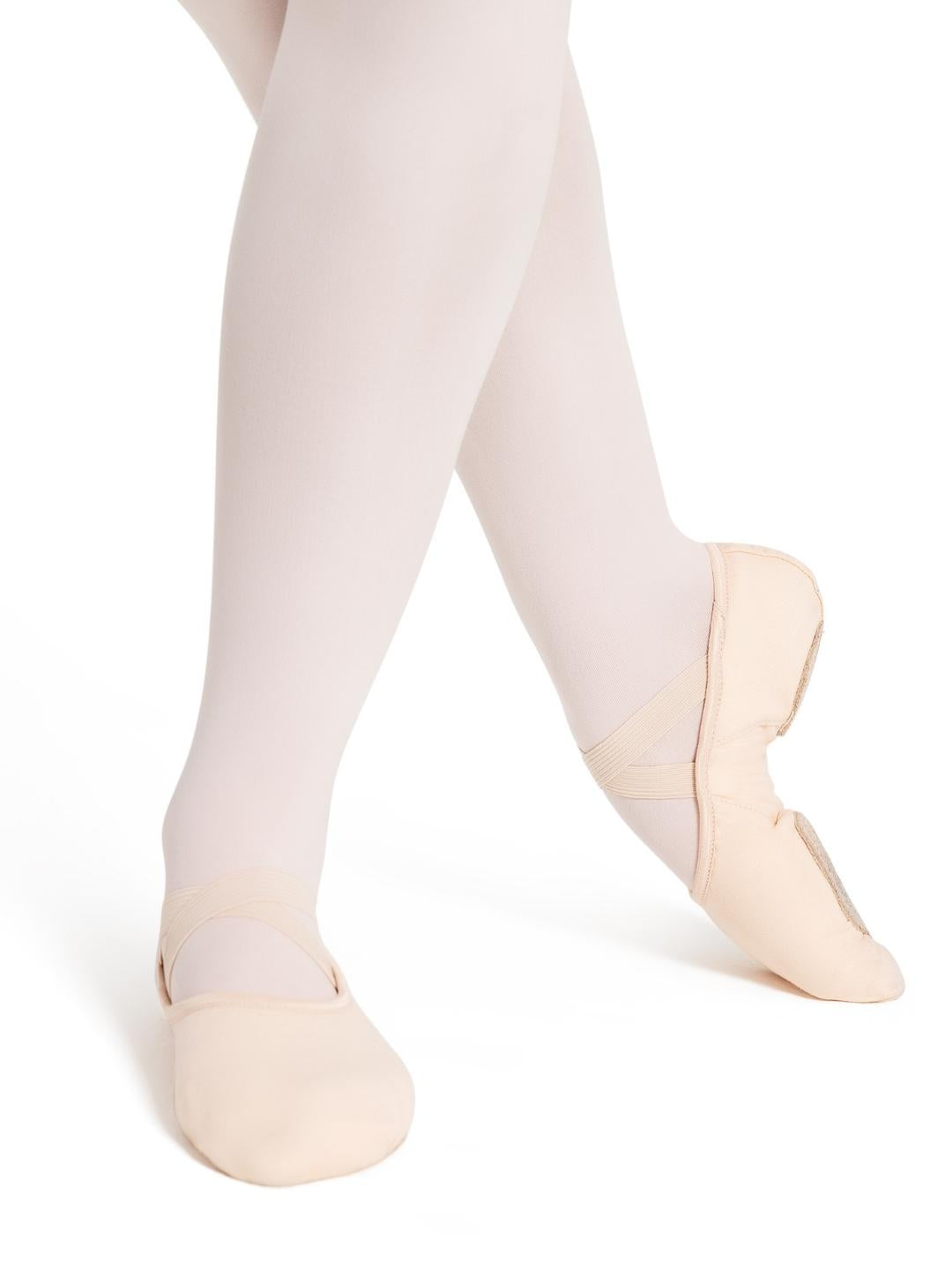


Demi pointe shoes sit between flat ballet slippers and full pointe shoes. They look like a pointe shoe on the outside, but the box is soft and there is no shank. A dancer cannot rise onto the tip of the shoe. They are a training tool, designed to prepare the body before that step is taken.
Demi Pointe: The Position and the Shoe
"Demi pointe" means two things in ballet. As a position, it means rising onto the balls of the feet with the heels lifted, sometimes called half pointe, as in a relevé to demi pointe. As a shoe, it means the soft training shoe this guide is about, which lets a student build the strength full pointe will later need.
What Demi Pointe Shoes Actually Do
Teachers use demi pointe shoes to build strength, muscle memory and technique before a student moves into a hard box and full shank. The foot, ankle and lower leg need time to develop. Rushing that process causes injury. Demi pointe shoes bridge the gap safely.
They allow students to practise the positions, footwork and port de bras of pointe work without the risk of going over onto a fully blocked tip. The soft box gives feedback without force.
Who Should Wear Demi Pointe Shoes
Students usually start in demi pointe shoes as they prepare for full pointe, when their teacher recommends it. Age alone does not determine readiness. Bone development, strength and technique all matter more than a birthday.
A qualified teacher will decide when a student moves to demi pointe, and later to full pointe. Parents should never purchase either without teacher guidance.
Signs a Student May Be Ready for Demi Pointe
- The teacher has recommended them directly
- The student has at least two to three years of consistent classical training
- They can hold a strong, stable demi plie and releve
- Their foot and ankle alignment is reliable
How Demi Pointe Shoes Are Sized and Fitted
Fit is critical. A demi pointe shoe that is too long gives false feedback. One that is too narrow can cause unnecessary pressure on developing bones.
Sizing varies by brand. Capezio, for example, advises starting from street shoe size for its demi pointe shoes, so check each brand's guide rather than assuming a rule. Width matters just as much as length. Feet come in narrow, medium, wide and extra wide fittings, and the shoe needs to match the natural shape of the foot.
- Have the student fitted in person where possible
- The toes should sit flat without curling inside the shoe
- There should be no gaping at the sides or heel
- The drawstring should sit snug but not dig in
If you are ordering online, measure both feet carefully. Use the length of the longer foot and check the brand's specific sizing guide before ordering.
Demi Pointe vs Full Pointe: What Parents Need to Know
A demi pointe shoe cannot support a dancer on full pointe. It is not a cheaper or easier version of a pointe shoe. It is a different shoe with a different purpose.
Full pointe shoes have a rigid box and a shank that supports the arch when the dancer is fully en pointe. That structure is absent in demi pointe shoes by design. The two should not be confused or substituted for each other.
When the time comes to move into full pointe, professional fitting is essential. When that time comes, book a free pointe shoe fitting with Wendy at our Clyde North store, and browse our pointe shoes from Bloch, Capezio and Grishko.
How Long Demi Pointe Shoes Last
Demi pointe shoes wear at a similar rate to ballet slippers, though the satin outer can show scuffing faster. Most students in regular classes will get one to two full terms from a pair before the sole or fabric breaks down.
- Check the sole for wear after every few weeks of classes
- Store shoes flat in a breathable bag, not squashed in a dance bag
- Allow the shoes to air out after each class
- Replace when the heel slips or the sole separates
What to Look for When Buying
Not all demi pointe shoes are the same quality. Look for a suede or leather sole that offers grip without being too sticky on sprung floors. The satin should be reinforced at stress points. The drawstring casing should be stitched firmly so it does not pull away with use.
Demi Pointe Shoes at Total Dance
We stock three demi pointe shoes, each suited to a different foot shape:
- Capezio Demi Pointe Shoe B: a broad toe box for a medium to wide forefoot with even length toes.
- Capezio Demi Pointe Shoe T: a tapered toe box for a medium to wide forefoot with tapered toes.
- Bloch Soft Sole Demi Pointe: made on the same last as Bloch's Suprima pointe shoe, with a narrow, tapered shape and a snug heel.
Not sure which suits? Call the shop on 1300 32 6666 or visit us in Clyde North, and Wendy and the team can help.
Talk to your teacher first. Buy the right size second. Everything else follows from those two steps.
Wondering what comes next? Read is your child ready for pointe and what to expect at your first pointe fitting, or browse our pointe shoes and ballet shoes.
Demi pointe shoe questions
What are demi pointe shoes?
Demi pointe shoes sit between flat ballet slippers and full pointe shoes. They look like a pointe shoe on the outside, but the box is soft and there is no shank, so a dancer cannot rise onto the tip. They are a training tool used to prepare the foot, ankle and lower leg before full pointe.
What is the difference between demi pointe and full pointe shoes?
A full pointe shoe has a hard box and a shank that support a dancer on the tips of the toes. A demi pointe shoe has a soft box and no shank, so it cannot be used to go up on pointe. Demi pointe builds the strength and technique that full pointe later requires.
What is demi pointe?
Demi pointe refers to rising onto the ball of the foot rather than the very tip. Demi pointe shoes are made for that work, letting a student practise the positions and footwork of pointe without the risk of a fully blocked tip.
What size demi pointe shoes should I buy?
Sizing varies by brand. Capezio advises starting from street shoe size for its demi pointe shoes. Check each brand's guide, and have length and width checked in person if you can.
Who should wear demi pointe shoes?
Students preparing for pointe, when their teacher decides they are ready to begin that training. The teacher makes this call, because it depends on strength, technique and training history.
Do you need demi pointe shoes before pointe shoes?
Many teachers use them as a bridge so the body has time to develop before moving into a hard box and full shank. Whether your dancer needs them, and for how long, is up to your teacher.


