
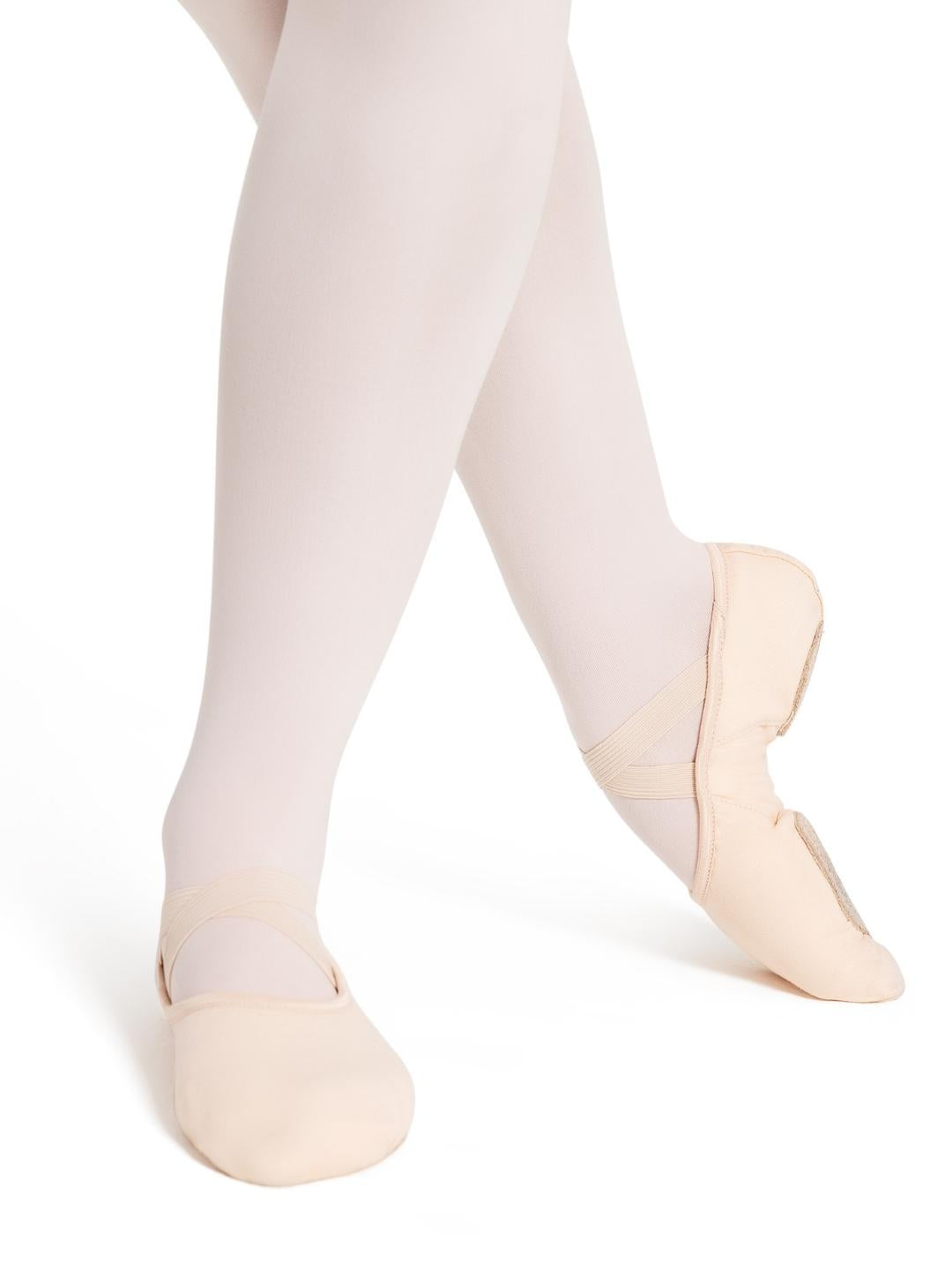


Choosing the right ballet dancewear in Australia takes more than a quick online search. Shoe fit, tight denier, leotard sizing, fabric, and school requirements all play a role. This guide covers every decision so you can shop with confidence, whether you are buying for a five-year-old's first lesson or a senior dancer preparing for exams.
Ballet Shoes: Fit Is Everything
Ballet shoes that fit poorly affect technique and can cause injury over time. Getting this right from the start matters.
There are two main materials to choose from: canvas and leather. Canvas shoes are lightweight, breathable, and mould quickly to the foot. Leather shoes are more durable and hold their shape well, making them a popular choice for younger students whose feet are still developing. Split-sole designs offer better flexibility for students working on their arch. Full-sole shoes provide more resistance, which many teachers prefer for beginners.
Sizing varies between brands. Most Australian dance schools follow RAD or CSTD syllabus guidelines, and some specify a preferred brand. Always check with the teacher before purchasing. As a general rule, ballet shoes should fit snugly with no excess fabric at the toe but without pinching. A thumb's width of growing room is too much. The shoe should feel like a second skin.
For pointe shoes, never purchase online without a professional fitting. Incorrect pointe shoes cause serious foot damage. Visit a specialist dancewear retailer in person for this step.
Tights: Denier, Style, and Colour by Level
Ballet tights are not all the same. Denier affects coverage, durability, and appearance under stage lighting.
- 40 to 60 denier suits most class and exam situations. Opaque enough for a clean line, thick enough to last.
- 70 denier and above is better for younger students. More resistant to snags and easier to handle.
- Low denier styles (15 to 20) are reserved for performance where a bare-leg look is required.
Footed tights work well for most classes. Convertible tights (with a hole in the sole) suit dancers who alternate between ballet shoes and bare feet across different styles. Stirrup tights are less common in ballet but useful for contemporary or jazz.
Colour is usually set by the school. Blush pink is standard for ballet in Australia. White tights are often required for exams. Check the syllabus requirements before buying.
If you are preparing a new student for their first lesson, the article on what to pack for a child's first ballet class covers the full checklist, including tights, shoes, and hair.
Leotards: Cut, Fabric, and Australian Sizing
Leotard sizing in Australia typically follows age-based sizing for children (2, 4, 6, 8 and so on) and standard dress sizing for adults (8, 10, 12, 14). However, leotard fit depends heavily on torso length, not just body weight or height. A dancer with a long torso may need a size up to avoid pulling or restriction through the crotch.
Key fit points to check
- Shoulder straps should sit flat without digging in or slipping.
- The leg line should sit comfortably at the hip without riding up.
- The back should not gap. A leotard that is too large across the back will not stay in place during movement.
- There should be no fabric bunching at the front or pulling at the back seam.
Fabric choices for class and performance
Nylon and Lycra blends are the most common. They hold their shape through repeated washing and offer good four-way stretch. Moisture-wicking fabrics suit high-intensity classes where the dancer is working hard. Velvet and lace trims are popular for concerts but impractical for weekly class use. Choose plain, smooth fabrics for everyday training.
Most schools specify a leotard colour. RAD-affiliated schools commonly require a particular colour by grade. If you are unsure, ask the teacher before buying.
Adult beginners often ask whether standard leotards will work for them. The answer is yes, as long as sizing is correct. The guide to starting ballet as an adult in Australia covers what to wear and what to expect in your first classes.
Hair and Accessories
Most ballet teachers require hair to be secured off the face and neck. A neat bun is the standard for class, exams, and concerts. Bobby pins, hair nets, and a quality bun maker all help. If you are new to this, the step-by-step guide on creating a secure ballet bun for exams and concerts covers everything from sectioning the hair to pinning it so it holds through a full performance.
Other useful accessories include shoe bags to keep ballet shoes separate from street shoes, elastics for securing shoe ties, and a small dance bag with a separate compartment for wet or used items.
Shop Ballet Dancewear in Australia
Stocking quality brands sized for Australian students, from beginner to advanced, you can browse the full range of ballet dancewear and accessories and filter by category, size, and colour. If you need help with sizing or have a question about school requirements, the team is available to assist before you buy.


