

Finding the right dance shoes in New Zealand takes more than a quick search. Sizing systems vary between brands, fit requirements differ across disciplines, and quality ranges widely. Knowing what to look for before you buy saves time, money, and a lot of frustration at the studio door.
Why Dance Shoe Fit Matters More Than You Think
A poorly fitted dance shoe affects more than comfort. It changes how a dancer distributes weight, how they point their foot, and how safely they land jumps. Shoes that are too long allow the foot to slide forward, creating blisters and weakening the arch. Shoes that are too tight restrict circulation and can cause long-term foot problems.
Fit should be checked with the dancer standing, not sitting. The shoe should feel snug without pinching. There should be minimal space at the toe, roughly half a centimetre, and the heel should not lift when the dancer rises onto their toes or the ball of the foot.
NZ Sizing Versus AU Sizing: What You Need to Know
New Zealand and Australia share the same shoe sizing conventions for most adult and children's footwear. This means Australian-sized dance shoes ordered from an Australian retailer will fit correctly without conversion for the majority of dancers. The exception is when brands use US or UK sizing on their labels, which some European and American manufacturers do.
As a general guide for ordering from an AU retailer:
- AU/NZ sizing aligns directly, so a size 3 AU is a size 3 NZ.
- US women's sizing runs approximately 1.5 sizes larger than AU. A size 6 AU is roughly a US 7.5.
- UK sizing runs approximately 0.5 to 1 size smaller than AU. A size 6 AU is a UK 5 or 5.5.
- Always check the brand's own size chart before ordering, as dance-specific footwear sometimes uses its own scale.
When ordering for children, measure the foot length in centimetres and compare against the specific brand chart. Children's feet change quickly. A measurement taken three months ago is not reliable enough to base a purchase on.
Choosing the Right Shoe for Each Dance Discipline
Not all dance shoes are interchangeable. Each style of dance has specific requirements that affect sole construction, heel height, and material.
Ballet Shoes
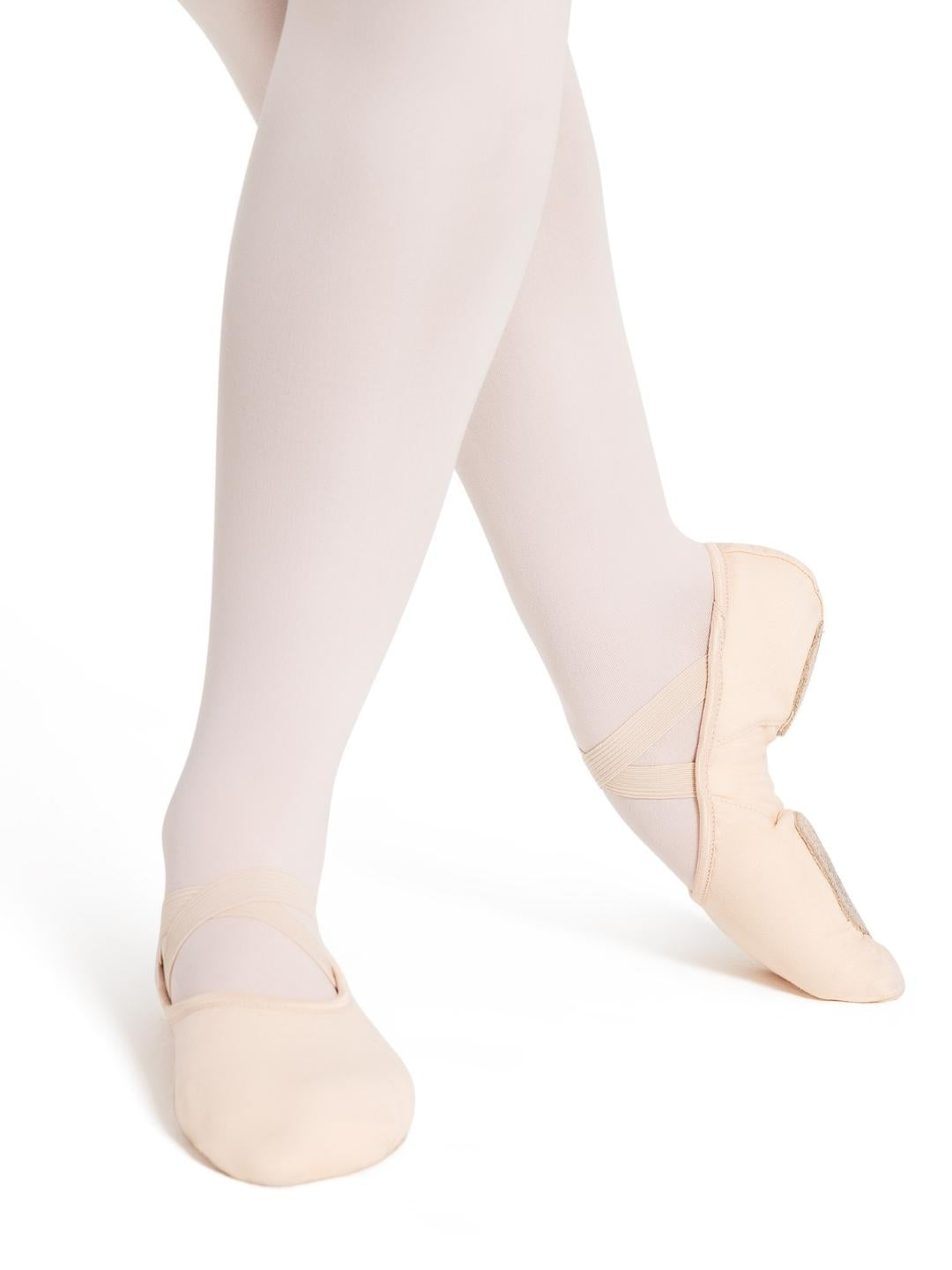
Ballet shoes come in full-sole and split-sole versions. Full-sole shoes provide more resistance under the foot, which builds arch strength. They are generally recommended for beginner students. Split-sole shoes have a gap in the middle of the sole, allowing the arch to flex fully and show the line of the foot. Most teachers move students to split-sole once they have enough arch strength to support the transition.
Canvas ballet shoes are lighter and mould to the foot faster. Leather ballet shoes are more durable and hold their shape longer. Canvas is usually preferred for recreational students. Leather suits those dancing frequently or performing regularly.
Jazz Shoes
Jazz shoes are almost always split-sole. The low heel and flexible construction allow for the wide range of footwork jazz technique demands. Fit should be snug. A loose jazz shoe shifts during turns and reduces precision in footwork.
Tap Shoes
Tap shoes need a firmer sole to support the metal taps and absorb repeated impact. Oxford-style tap shoes suit most students. Lace-up construction gives a more secure fit than slip-on styles, particularly for children.
Contemporary and Lyrical Footwear
Contemporary dance often uses half-soles, which cover the ball of the foot and toes while leaving the heel bare. They protect the skin on sprung floors without restricting barefoot movement. Sizing should follow the dancer's street shoe size, then adjust up half a size if the shoe feels restrictive across the knuckles of the toes.
Where to Buy Dance Shoes in New Zealand
Ordering from an Australian dance retailer is a practical and cost-effective option for New Zealand dancers. Sizing aligns, shipping is straightforward, and the range available online is significantly wider than what most local NZ suppliers stock.
If budget is a consideration, particularly for growing children who may need new shoes each season, it is worth checking discounted dancewear options before paying full price. Our discounted dance shoes and clearance dancewear collection includes a rotating range of footwear across styles and sizes. Stock changes regularly, so it is worth checking back if a specific size is not available on your first visit.
For more guidance on making the most of sale pricing without compromising on fit or quality, the Total Dance clearance sale guide for dance clothing and shoes covers how to assess discounted items and what to prioritise when buying for children.
Practical Tips Before You Order
- Measure both feet. Most people have one foot slightly larger. Fit to the larger foot.
- Measure at the end of the day when feet are at their largest.
- Ask your child's dance teacher which sole type and style is required before purchasing.
- Check the retailer's return and exchange policy before ordering, particularly for children's sizing.
- Order sooner than you think you need to. Allow time for an exchange if the first size is not right.
Dance shoes are a functional piece of equipment, not just an accessory. Getting the fit right from the start supports better technique, reduces injury risk, and means the shoes last longer. Take the time to measure carefully, check the size chart, and confirm the style with the teacher before placing an order.


