
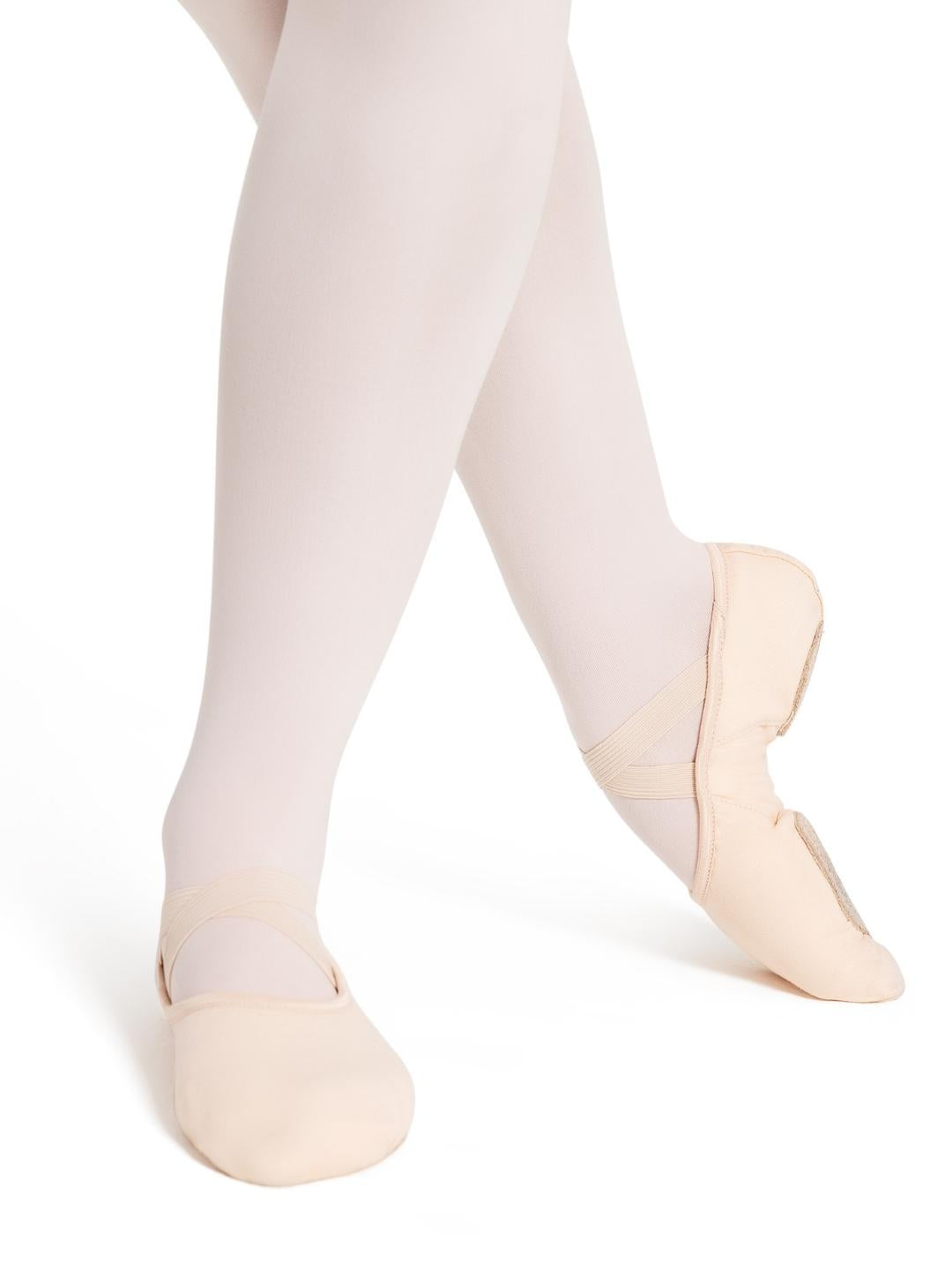


It is the question every young ballet dancer asks and every dance parent wonders about: when is my child ready to go up on pointe? The honest answer is that it depends on the dancer, not the calendar. Here is how readiness is really decided, and what you can do to help.
There is no magic age
You will often hear that pointe starts at around eleven. Age does matter, because young feet are still developing and the bones need to be strong enough to take the load. But age alone does not make a dancer ready. Two eleven year olds can be years apart in strength and technique. What matters is what the dancer can actually do, and that is why the decision always rests with the ballet teacher who sees them every week.
The readiness checklist
Teachers look for a combination of things before recommending pointe. Broadly, they want to see:
- Enough training. Usually at least two to three years of consistent ballet, often more, with classes more than once a week.
- Strength. Strong ankles, feet and core, and the ability to hold a proper releve without wobbling or rolling in.
- Sound technique. Correct alignment, engaged turnout, and real control through the foot and ankle.
- Physical readiness. Feet and bones developed enough to take the load of pointe work safely.
- Consistency. The dancer shows this strength and control reliably in class, not just on a good day.
Why it is worth the wait
Pointe work places real load on young feet and ankles. Going up before the strength and technique are there is a common cause of injury, and can set a dancer back further than waiting ever would. A dancer who starts pointe well prepared progresses faster, dances more comfortably, and is far less likely to get hurt. Patience here is a gift.
How to help your dancer get pointe ready
Between now and pointe, the best thing a dancer can do is keep showing up and building strength in class. Teachers often set pre pointe exercises, and simple tools can help at home when a teacher recommends them, such as resistance bands and foot strengtheners from our dance equipment and training aids range. Always follow your teacher's guidance rather than pushing ahead alone.
Your teacher says yes. What now?
Once your teacher gives the go ahead, the next step is a professional pointe shoe fitting. A good fit is just as important as readiness itself. Our guide on what to expect at your first pointe fitting walks you through it, and you can book a fitting at our Clyde North store whenever you are ready.
Book a one on one pointe fitting with our experienced team at Clyde North.
Book a Pointe Fitting Read the fitting guideFrequently asked questions
What age can you start pointe?
Most dancers begin somewhere from around eleven, but it varies. Readiness depends on strength, technique and years of training, and the ballet teacher decides when the time is right.
How do I know if my child is ready?
Your ballet teacher will tell you. They assess strength, technique and training history in class over time. If pointe has not been mentioned yet, it usually means there is more strength to build first.
How many years of ballet before pointe?
Commonly at least two to three years of consistent training, often with more than one class a week, but there is no fixed rule. Quality of technique matters more than years alone.
Can adults start pointe?
Yes. Adults can begin pointe with the right training and a teacher's guidance. The same readiness principles apply: strength, sound technique and safe, gradual progression.
Is pointe safe for young dancers?
When a dancer is properly prepared, taught well and correctly fitted, pointe is a safe and rewarding part of ballet. The risks come from starting too early or dancing in the wrong shoes.


