
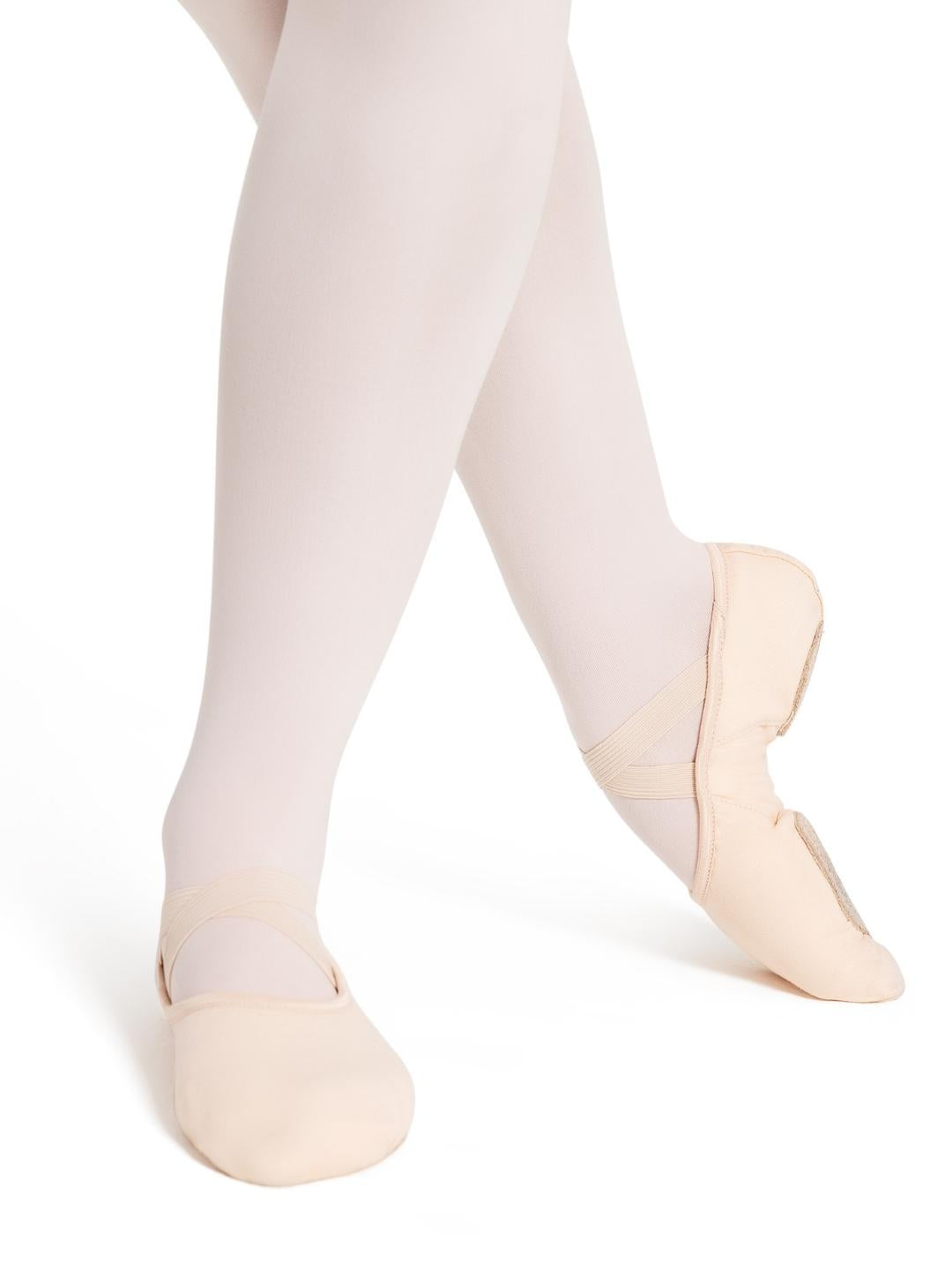


Finding the right dance shoe makes a genuine difference to how a dancer develops, feels in class, and performs on stage. For New Zealand dancers and dance parents, Capezio ballet and jazz shoes offer proven quality across every level, from first-year beginners to serious vocational students. This guide covers style differences, fit, sole construction, and how to get the right pair.
Capezio Ballet Shoes: Canvas vs Leather
Capezio makes ballet shoes in both canvas and leather. Each material behaves differently on the foot and the floor, and the choice matters more than most people realise.
Canvas moulds quickly to the shape of the foot. It is lighter, breathes better in warm studios, and tends to show the line of the foot more clearly. Most teachers prefer canvas for recreational and serious students alike. It washes easily, which matters for younger dancers who go through shoes fast.
Leather is more durable and holds its shape longer under heavy use. It takes longer to break in but often suits dancers with narrower feet or those who need a firmer structure during the early years of training. Leather also grips the floor slightly differently, which some dancers find helpful for turning.
If you are weighing up the two materials in detail, the full breakdown in our guide to canvas versus leather Capezio ballet shoes covers everything you need to make a confident decision.
Sole Options and Why They Matter
Beyond material, sole construction changes how the shoe performs entirely.
Full sole: A single piece of leather or rubber runs the length of the shoe. This gives strong support and is standard for beginners. It encourages correct foot placement and helps younger dancers build strength without overstretching.
Split sole: Two separate sole sections sit under the ball of the foot and the heel, leaving the arch exposed. This allows a far greater range of motion through the foot and shows the arch line more clearly. Split sole styles suit dancers who have already developed basic foot strength and technique.
A common mistake is moving a beginner into a split sole too early. The extra flexibility can mask weak footwork rather than develop it. Most teachers recommend full sole for at least the first year of ballet training.
Capezio Jazz Shoes: Choosing the Right Style
Jazz shoes serve a different purpose to ballet shoes. They need to allow lateral movement, grip the floor for turns, and flex through the ball of the foot for jumps and leaps.
Capezio produces several jazz shoe styles, and the right one depends on the type of class and the dancer's foot shape.
- Slip-on jazz shoe: A clean, simple profile that suits most jazz and musical theatre classes. Easy to get on and off, with a low-cut vamp that does not restrict movement.
- Lace-up jazz shoe: Better suited to dancers with a higher instep or those who need a more secure fit. The lace gives adjustability across the width of the foot.
- Jazz sneaker: Used in hip-hop, contemporary, and commercial jazz styles. Offers more cushioning and a higher cut around the ankle.
For guidance on how these styles translate across different age groups and training levels, the complete Capezio ballet and jazz shoe buying guide is a useful reference before you purchase.
Getting the Fit Right for New Zealand Dancers
Capezio sizing runs differently across styles, and this catches a lot of shoppers off guard. A dancer who wears a size 5 street shoe will not automatically take a size 5 in every Capezio style.
Ballet shoes are typically sized 1.5 to 2 sizes down from street shoe size for adults. Children's sizing can vary more, and foot width plays a significant role. Capezio offers some styles in multiple widths, including narrow and wide fittings.
Jazz shoes generally size closer to street shoe size but still benefit from a proper measurement rather than guessing. When ordering online, always measure both feet and use the larger measurement. Feet are rarely identical in size.
For a detailed size comparison across Capezio styles, the New Zealand fit and sizing guide walks through each model with specific measurement instructions.
Ordering Capezio Shoes from New Zealand
Total Dance ships Capezio ballet and jazz shoes to New Zealand directly. The range includes current season styles across canvas and leather ballet shoes, full sole and split sole options, and the full jazz shoe lineup.
Browsing the Capezio studio range gives you a clear view of what is available at each price point, with sizing guides on each product page. If you are unsure between two styles, contact the team directly. Getting the shoe right the first time saves time and return shipping costs from across the Tasman.
Stock levels on popular sizes move quickly around term starts and exam seasons. Ordering early gives you more options and avoids delays that could affect class schedules.


