
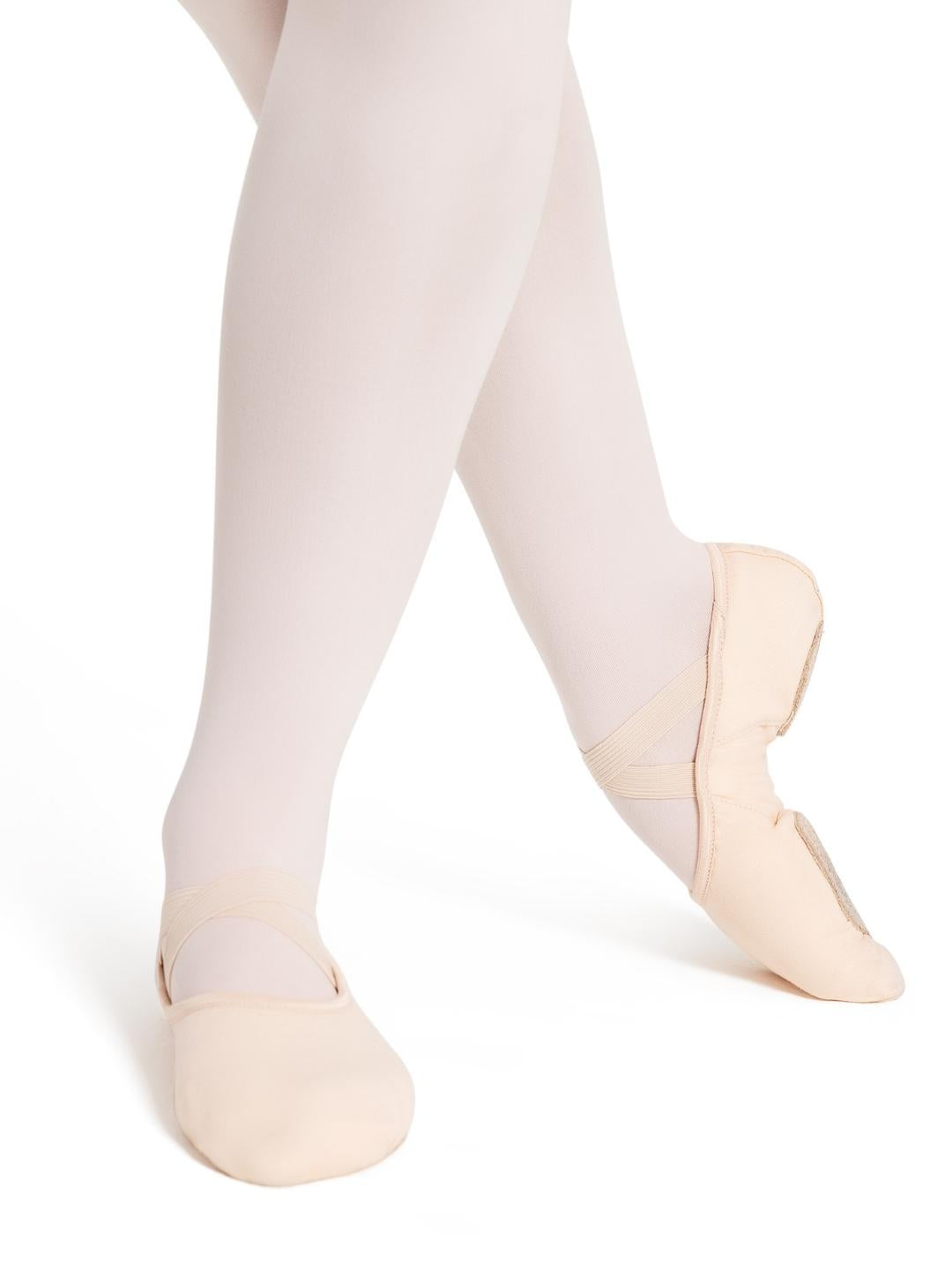


Canvas or leather? It is the most common question when buying Capezio ballet shoes in Australia, and it deserves a proper answer. The material affects fit, movement, floor grip, durability, and how comfortable your dancer feels in class. This guide covers both options clearly so you can choose with confidence.
Why Ballet Shoe Material Affects Technique
Ballet shoes are not just protective footwear. They are a functional part of technique training. The sole flexibility, the way the upper moulds to the foot, the grip on studio floors, and the durability through repetitive wear all vary significantly between canvas and leather. Getting this decision right matters from the very first class.
If you are choosing Capezio dancewear in Australia for the first time, it helps to understand what each material does well before you spend a cent. Our Capezio range for Australian dancers includes both options across a variety of styles and fits.
Canvas Ballet Shoes: What You Need to Know
Canvas is the most popular choice for recreational and serious students alike. It is lightweight, breathes well during warm classes, and conforms to the shape of the foot relatively quickly. Most dancers find canvas feels more flexible from the first wear, which suits students who are still developing strength and articulation through the foot.
- Lighter weight than leather, less fatigue over long classes
- Stretches to fit the foot shape within a few wears
- Better breathability in warmer studios or summer terms
- Generally more affordable and easy to replace as feet grow
- Machine washable in most cases, practical for younger students
The main trade-off is durability. Canvas wears through faster than leather, particularly at the toe box and sole split. For dancers training five or more days a week, canvas may need replacing every few months.
Sizing tip: canvas stretches. Size down by half a size from your street shoe measurement, or try the shoe on with a snug fit at purchase. A little resistance is normal and expected.
Leather Ballet Shoes: What You Need to Know
Leather holds its shape longer and provides more structure around the foot. This suits dancers with wider feet or those who need more support through the arch. It also tends to last significantly longer than canvas under heavy training loads.
- More durable, better value for high-frequency training
- Holds shape well and provides a defined line on the foot
- Suited to wider feet or dancers who need more arch support
- Takes longer to break in than canvas
- Less breathable, can feel warmer in summer conditions
Leather does require a break-in period. The upper is stiffer initially and will feel firm compared to canvas. This is not a defect. It is simply the nature of the material, and most dancers adjust within one to two weeks of regular wear.
Sizing tip: leather stretches less than canvas. Fit leather shoes with only a small amount of extra room, roughly a thumb-width at the toe. Too much room will not self-correct over time the way canvas does.
Choosing the Right Capezio Style for Your Dance Level
Capezio produces several ballet shoe styles, and the differences matter beyond just canvas versus leather. The Daisy is a classic starting point for younger beginners. The Juliet offers a more fitted profile suited to intermediate and senior students. The Cobra split-sole canvas is popular in Australian studios for its flexibility and clean line under the arch.
If your dancer is preparing for exams or performances, speak with your teacher before purchasing. Many RAD and CSTD syllabi specify shoe requirements, and getting the wrong style can cause issues at assessment time. Our guide to choosing the right Capezio style for your level covers this in more detail.
For New Zealand families purchasing through an Australian retailer, postage times and sizing conversions are worth checking in advance. The full Capezio guide for NZ dancers includes practical advice on ordering cross-border.
Practical Fit Advice for Parents Buying Online
Buying ballet shoes online without trying them first is manageable if you follow a few simple steps.
- Measure both feet at the end of the day when feet are at their largest
- Use the longest foot measurement for sizing, not an average of both
- Check the specific Capezio size chart, as sizing varies by style
- For growing children, one size of growing room is acceptable in canvas, not leather
- Elastic should be sewn in place before first wear, not left loose
If you are unsure which style suits your child's foot shape, ordering online with a clear returns process makes it easier to compare and exchange without stress.
Browse the full range of Capezio ballet shoes, jazz shoes, and accessories in our Australian Capezio studio collection and filter by material, style, and size to find the right fit for your dancer.


