


Choosing the right lyrical and contemporary dancewear in Australia takes more than picking something that looks good on a hanger. Fit, fabric, and freedom of movement all affect how a dancer performs and how comfortable they feel across hours of training. This guide covers what to look for, how sizing works, and what suits different ages and levels.
What Makes Lyrical and Contemporary Dancewear Different
Lyrical and contemporary styles demand full-body movement. Extensions, floorwork, jumps, and turns require clothing that moves with the dancer, not against them. Stiff fabrics, tight seams, and poor stretch recovery will restrict technique and cause discomfort fast.
Unlike ballet or jazz, lyrical and contemporary movement often involves contact with the floor, so fabric durability matters as much as stretch. You need pieces that hold their shape after repeated washing and still feel soft against skin during long rehearsals.
For a broader look at what suits these styles, our lyrical and contemporary dancewear range includes options for students, performers, and competitive dancers across all ages.
Fabric: What to Look For
The best fabrics for lyrical and contemporary work share a few key qualities. They stretch in multiple directions, recover their shape quickly, and stay comfortable against skin through intense movement.
- Four-way stretch: Essential. Fabric that only stretches one way will pull and restrict during extensions and floorwork.
- Moisture-wicking: Keeps dancers comfortable during long training sessions by drawing sweat away from the skin.
- Soft hand feel: Important for floorwork. Rough or textured fabrics can cause friction burns on knees, hips, and arms.
- Colour retention: Look for pieces that hold their colour after washing. Faded costumes look flat on stage and under studio lighting.
Nylon-spandex and polyester-spandex blends are the most common choices and perform well across all these areas. Mesh inserts add visual interest without sacrificing movement. Some ranges include a silky mesh or chiffon overlay that flows beautifully in lyrical performance without restricting the body underneath.
How to Get the Right Fit for Lyrical Dancewear
Sizing in Australian dancewear does not always match standard clothing sizes. Most dance brands size by height and body measurements rather than age alone. Always check the size chart for the specific brand before ordering.
For Children and Teens
Growth happens fast. For younger dancers, measure height, chest, waist, and hips every three to four months. A leotard or unitard that fits well should sit flat against the body with no pulling at the shoulders or gaping at the chest. There should be enough room in the seat and hips for high extensions without the fabric riding up.
Avoid sizing up too much hoping to get extra wear. A loose leotard will bunch under costumes and can affect how a teacher sees the dancer's lines during class.
For Adult Dancers
Adult sizing in dancewear tends to run smaller than standard Australian clothing sizes. If you are between sizes, size up for comfort during floorwork. Compression-style pieces should feel snug but never restrict breathing or deep hip flexion.
Choosing Between Leotards, Unitards, and Two-Piece Sets
The right garment depends on the context. Class, rehearsal, and performance each call for something slightly different.
- Leotards: A reliable choice for class and auditions. Pair with loose pants or shorts for rehearsal and remove layers as the body warms up.
- Unitards: Ideal for contemporary performance. They create a clean line from shoulder to foot and eliminate the gap that can appear between a leotard and footless tight.
- Two-piece sets: Popular for training. A crop top paired with shorts or bike pants allows for temperature control and is practical for warm-ups.
- Mesh and overlay styles: Used for lyrical solos and performance. These add movement and visual flow without adding bulk.
For competition and performance, check with the studio or adjudicator first. Some competitions have specific requirements around coverage, colour, and style.
Footwear and Accessories
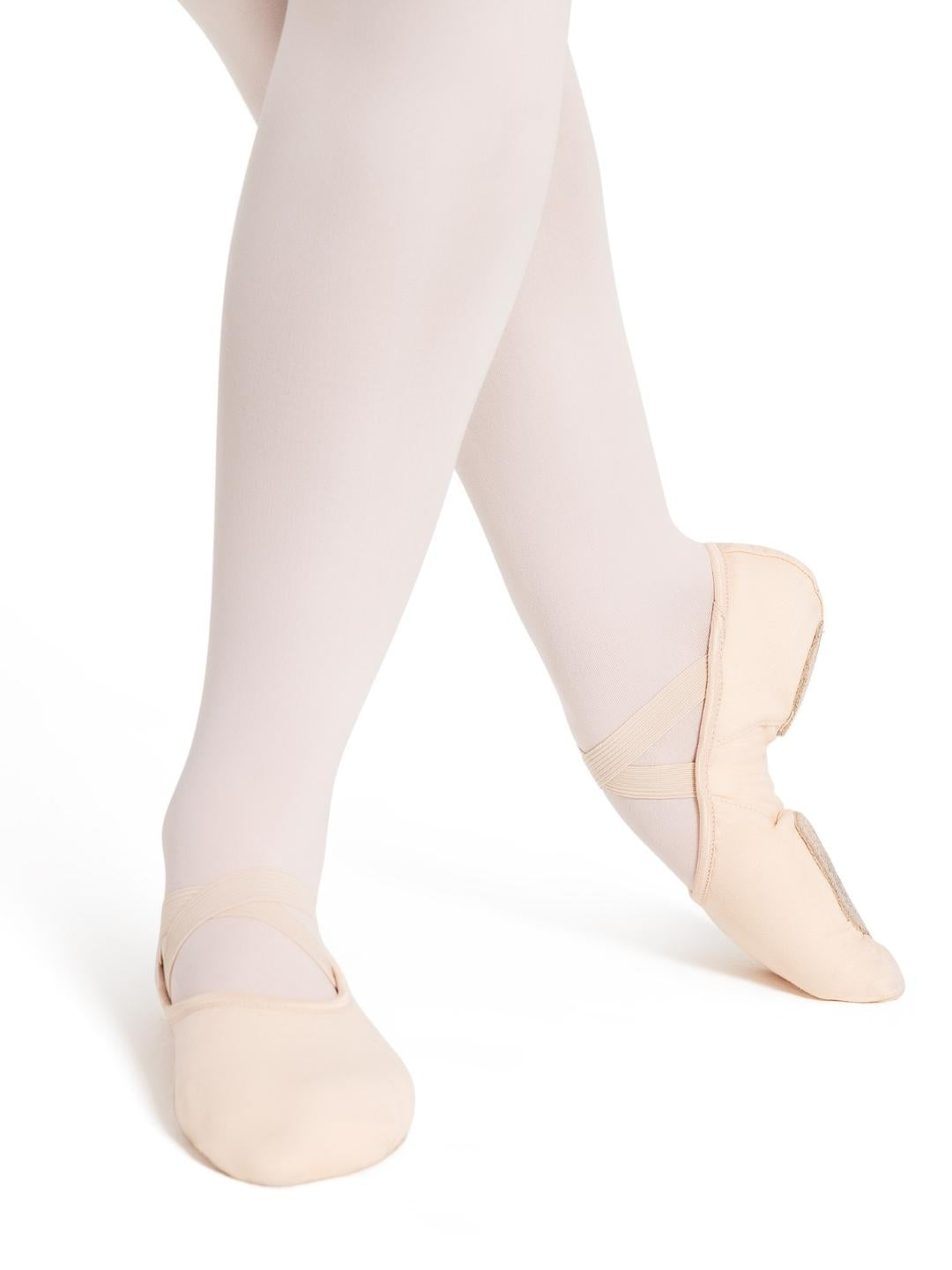
Most contemporary dancers train and perform barefoot or in half-sole shoes. Half-soles protect the ball of the foot during turns while leaving the toes free for pointing and floorwork. Foot undies are a popular minimal option for dancers who want some protection without coverage.
For lyrical performance, nude-tone footwear is the standard choice as it extends the line of the leg without drawing attention away from the movement.
Caring for Your Dancewear
Quality dancewear lasts longer with a little care. Wash in cold water on a gentle cycle and hang to dry rather than putting pieces in the dryer. Heat breaks down elastane fibres and causes garments to lose their stretch. Turn pieces inside out before washing to protect printed or embellished surfaces.
Rinse pieces as soon as possible after training to prevent sweat from degrading the fabric over time.
For more guidance on selecting pieces for lyrical performance and training, the complete guide to buying lyrical and contemporary dancewear in Australia covers style choices in more detail.


