
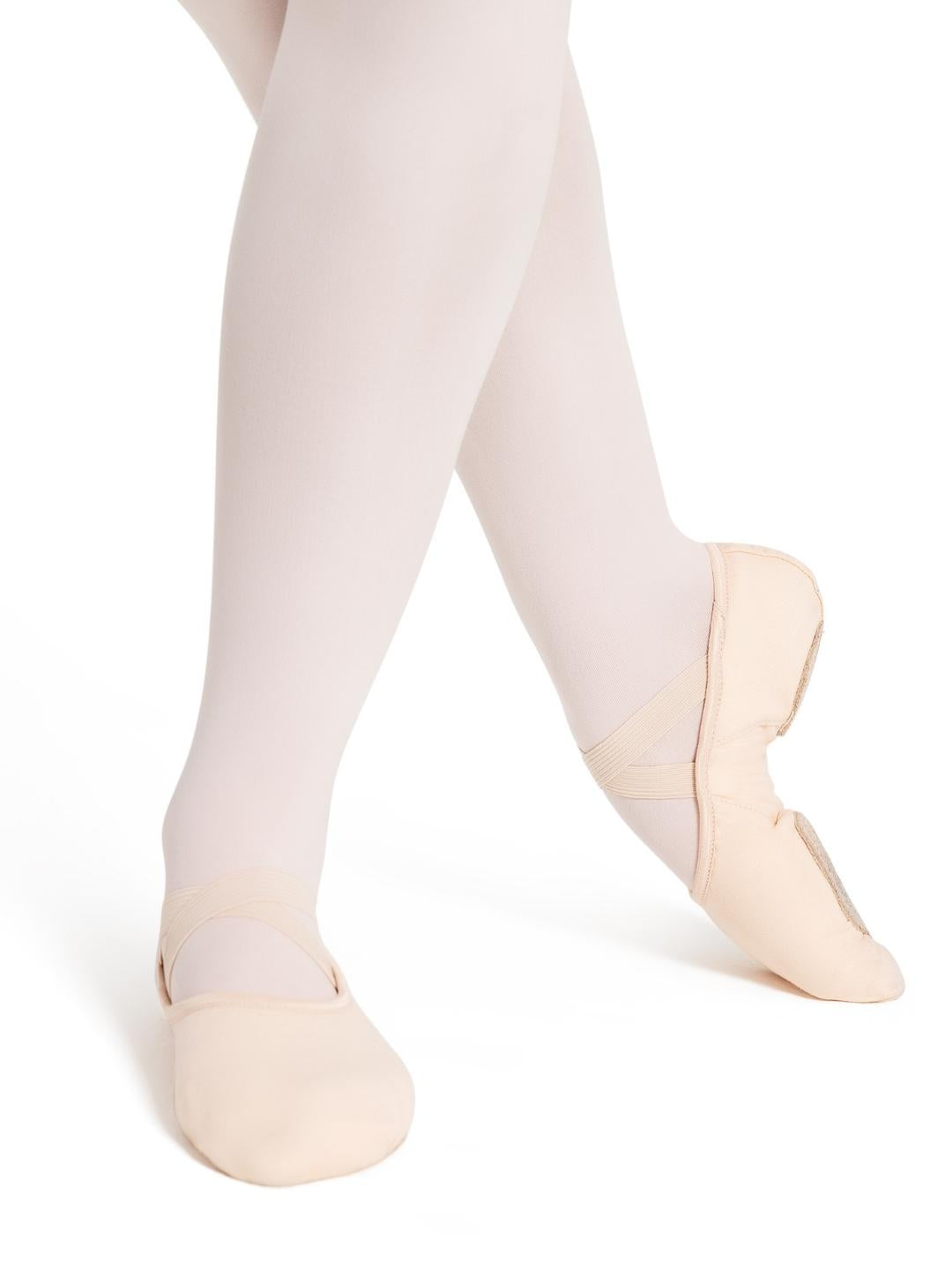


The right tap shoe affects the sound, the feel underfoot, and the dancer's confidence from the very first class. This guide covers what to look for, how to size correctly, and which styles suit different levels, so you can buy with confidence.
How to Choose the Right Tap Shoe for Your Level
Not all tap shoes are built the same. The construction, tap plate material, and sole flexibility all affect how the shoe performs. Start by matching the shoe to the dancer's experience level.
Beginner dancers
Look for a lace-up oxford style with a low heel. These give better ankle support and a more stable base, which matters when a student is still building technique. A split sole with a lightweight tap plate produces a clear, responsive sound without requiring extra effort from the foot.
Intermediate dancers
At this stage, sound quality becomes more important. Look for shoes with a heavier tap plate, usually aluminium or steel. The heel height can increase slightly. Some intermediate dancers move toward a Mary Jane style, which suits certain syllabus work and gives a cleaner line through the foot.
Advanced and performance dancers
Advanced tap dancers often have strong preferences. Screw-in taps are popular because they allow customisation of sound and tension. A leather sole and structured shank give more control over footwork. If a dancer is performing regularly, fit and feel matter as much as function.
Getting the Fit Right
Tap shoes should fit snugly without pinching. The toe box needs enough room for the toes to lie flat, but not so much that the foot slides forward when the heel drops. Excess room at the toe kills the sound and throws off timing.
- Measure both feet. Most people have one foot slightly larger. Fit to the bigger foot.
- Measure at the end of the day when feet are at their largest.
- Children should have no more than a thumbnail's width of growing room. Too much space affects control.
- Australian sizing runs consistent with standard shoe sizing, but always check the brand's size chart. Some European-manufactured brands run narrow.
- Tap shoes do not stretch significantly, unlike ballet slippers. What you try on is what you get.
If ordering online, measure the foot length in centimetres and compare directly to the size chart. Do not guess based on school shoe size alone, as fit varies across brands.
Tap Shoe Styles Explained
There are a few main styles you will encounter when shopping for tap dancewear in Australia. Knowing the difference saves time and avoids a return.
- Oxford lace-up: The most common beginner style. Secure, supportive, and suitable for most syllabuses including ATOD, RAD, and CSTD.
- Mary Jane: A single strap across the instep. Neat appearance, popular for younger students and exam work. Less adjustability than a lace-up.
- Slip-on or elastic: Quicker to put on and take off. Suited to recreational classes and younger children who need independence getting ready.
- Bootie style: Ankle height with extra support. Less common but useful for dancers with weaker ankles or those recommended by a physio.
Check your dance school's requirements before purchasing. Many studios specify a style or colour for exams and concerts.
Tap Plate and Sole Materials
The tap plate is what produces the sound. Material and weight both make a difference.
- Aluminium taps: Lighter, brighter sound. Common on beginner and mid-range shoes.
- Steel taps: Heavier, louder, fuller tone. Preferred by advanced dancers and performers.
- Screw-in taps: Allow the dancer to adjust tension and replace taps as they wear down. A worthwhile investment for serious students.
- Riveted taps: Fixed in place. Lower maintenance, good for beginners, but cannot be replaced without resoling.
Leather soles give the best floor contact and durability. Synthetic soles are lighter and often more affordable, which suits a growing child's foot that will need replacing in six to twelve months.
What to Buy for a First Class
For a first tap class, a lace-up oxford with aluminium riveted taps is the practical choice. It covers most studio requirements, comes in at a reasonable price point, and holds up well through a beginner's first year.
Pair the shoes with comfortable, non-restrictive clothing. Most beginner tap classes do not require a specific uniform. Fitted shorts or jazz pants work well. As training becomes more structured, the studio will advise on uniform requirements.
Browse our tap dancewear Australia range to find shoes, accessories, and everything needed for class. Whether you are buying for a three-year-old starting their first class or a teenager preparing for exams, the range covers beginner through to performance level.


