
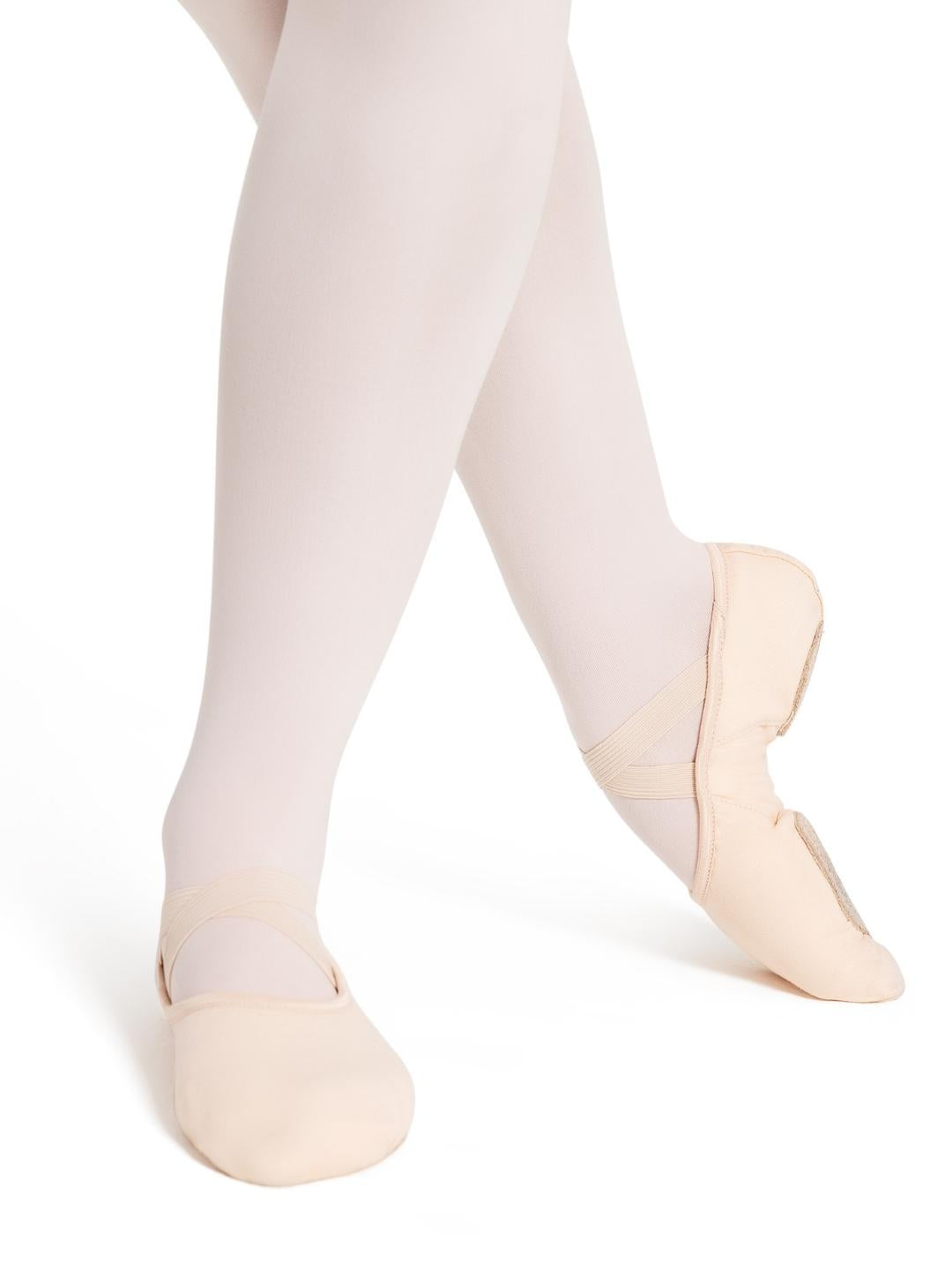


Finding the right footwear for contemporary and lyrical dance genuinely affects how a dancer moves, performs and feels on stage. The wrong shoe creates friction, limits articulation and can lead to preventable injuries. The right one disappears on the foot and lets technique do the talking. This guide covers what to look for, how to size correctly, and which styles suit different levels and disciplines.
What Makes Contemporary and Lyrical Shoes Different
Contemporary and lyrical footwear is built around one priority: maximum foot articulation. Unlike ballet slippers or jazz shoes, these styles are designed to move with the foot through full extension, relevé and floor work without adding bulk or resistance.
Most styles fall into three categories.
- Half soles: Cover only the ball of the foot. They protect the skin during floor work while leaving the heel and arch completely free. The most popular choice for lyrical and contemporary performance.
- Full sole pirouette shoes: A thin, sock-like shoe with a small suede patch under the ball of the foot. Ideal for turning, for younger dancers, and for those who prefer more coverage.
- Foot undies / paws: Minimal protection across the toes and ball of the foot. Suited to advanced dancers who want the closest thing to bare feet while still having some grip and skin protection.
Before settling on a style, it helps to understand the demands of your specific syllabus or choreography. Our contemporary and lyrical shoes buying guide covers the differences in depth, including which styles suit RAD, CSTD and free movement syllabuses.
How to Size Contemporary and Lyrical Shoes
Sizing these shoes correctly is critical. A shoe that is too large will slip during turns and bunch underfoot. One that is too small restricts the arch and causes pain during extension.
- Half soles and pirouette shoes generally size down from your street shoe. Most brands recommend going one full size smaller.
- Foot undies typically come in small, medium and large based on shoe size ranges. Check each brand's size chart because they vary significantly.
- Children's feet grow fast. Allow no more than a thumbs width of growing room. Any more and the shoe becomes a hazard on the floor.
- If your dancer is between sizes, size down for turning styles and size up for styles used primarily in floor work.
When shopping online, measure the foot length in centimetres on a flat surface and compare against the brand's own size chart. Do not assume sizing is consistent across brands.
Choosing the Right Material and Construction
The material affects durability, grip and how the shoe feels during extended wear.
Leather
Leather half soles and pirouette shoes mould to the foot over time and are highly durable. They suit dancers who train frequently and need a shoe that holds its shape through regular washing and heavy use. Leather styles tend to have a slightly firmer feel when new and soften with wear.
Microfibre and Stretch Fabric
Stretch microfibre styles are lightweight, quick drying and comfortable from the first wear. They work well for performance where appearance matters, as they create a clean line across the foot. They tend to wear faster than leather under daily training conditions.
Suede Pads
All half soles and pirouette shoes include a suede pad under the ball of the foot. This provides just enough grip to control turns without snagging on marley or sprung floors. Check the pad size. A larger pad gives more control during pirouettes. A smaller pad gives more freedom for floor-based movement.
What to Consider for Performance Versus Training
Many dancers own two pairs: one for training and one for performance. It is a practical approach if budget allows.
- Training shoes take daily abuse. Prioritise durability and fit over appearance.
- Performance shoes need to photograph and film well under stage lighting. A seamless, nude or flesh-toned finish elongates the line of the foot and reads cleanly from the audience.
- For eisteddfod and competition, check whether your studio or choreographer has a preference on style or colour before purchasing.
Browse our full range of contemporary and lyrical footwear to compare styles, materials and price points. Filters are available by brand, size and shoe type to make the search straightforward.
Care and Longevity
A well-maintained shoe lasts significantly longer. Simple habits make a real difference.
- Air shoes out after every wear. Never pack them damp into a bag.
- Spot clean leather styles with a damp cloth. Avoid soaking.
- Microfibre and stretch fabric styles can generally be hand washed in cold water and air dried flat.
- Replace shoes when the suede pad wears through. A worn pad affects grip and increases the risk of slipping.
For more detail on selecting the right footwear for your dance style and level, our footwear buying guide for contemporary and lyrical dancers is a practical starting point. Free shipping applies to all orders across Australia.


