
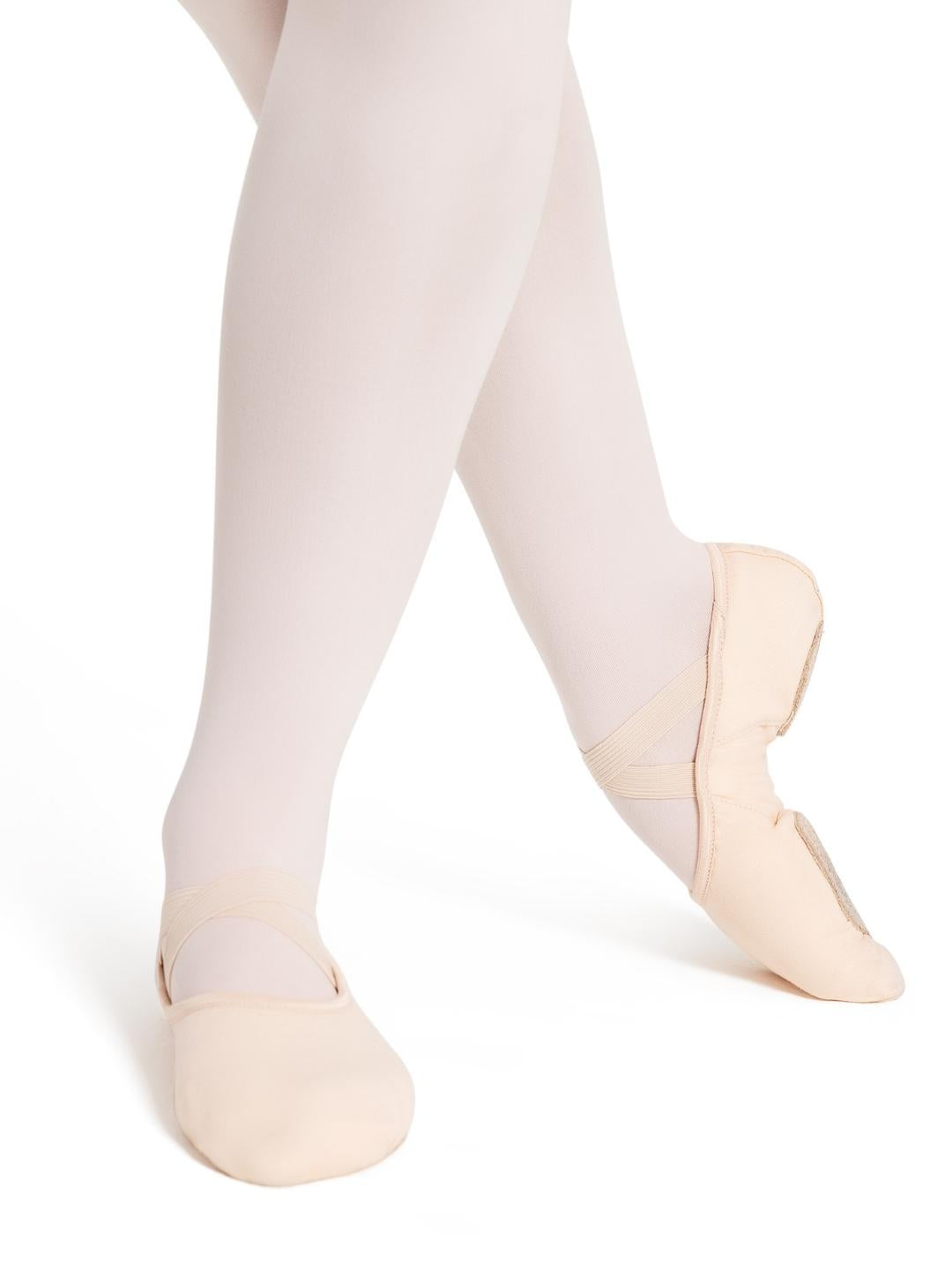


Ballet crossover shoes vs traditional ballet shoes. It is one of the most common questions NZ dancers and dance parents ask before buying. Both styles are legitimate. Both have real advantages. The right choice depends on your dancer's level, foot shape, and what they are doing in class.
What Are Ballet Crossover Shoes?
Crossover ballet shoes have a split elastic that crosses over the top of the foot and anchors under the arch. This design holds the shoe securely without a drawstring, and it gives a clean, streamlined look across the foot.
They suit dancers who want a secure fit without fussing over bows or drawstrings before class. Younger dancers especially benefit from the simplicity. Mums and dads will appreciate how quickly they go on and stay put.
The crossover elastic also tends to highlight the arch nicely, which many teachers prefer for performance and exam work. If your dancer is working toward RAD or NZAMD assessments, ask your teacher whether crossover style is accepted before buying.
What Are Traditional Ballet Shoes?
Traditional ballet shoes use a single elastic across the instep or a drawstring at the top of the shoe, sometimes both. The drawstring allows the dancer to customise how snugly the shoe fits around the heel and throat of the shoe.
For dancers with a higher instep or a narrower heel, a drawstring style can be easier to fit well. You can adjust it precisely, tuck the knot under, and get a finish that sits flat against the foot.
Traditional shoes are the standard in most Australian and NZ dance studios for beginners. They are widely accepted across all syllabus bodies and tend to be the default recommendation from teachers for first-time ballet students.
If you are still weighing up brands for either style, our guide comparing Bloch and Capezio ballet shoes breaks down the key differences in fit, sole construction, and who each brand suits best.
Key Differences to Help You Choose
Fit and Foot Shape
Crossover shoes work well for a standard to wide foot with a low to medium instep. The elastic distributes tension evenly across the foot, so there are fewer pressure points.
Traditional shoes with a drawstring give more control over fit. If your dancer has a narrow heel that slips, or a very high arch, the adjustability of a drawstring can make a meaningful difference to how the shoe performs in class.
Age and Experience Level
Crossover styles are popular with younger beginners because they are easy to put on independently. They also stay on reliably during class, which matters for little dancers who are still learning to manage their own gear.
More advanced dancers sometimes prefer traditional styles because the fit can be dialled in more precisely as technique demands increase. At pre-pointe and above, every millimetre of fit matters.
Sole Style
Both crossover and traditional shoes come in full sole and split sole versions. A full sole offers more support and resistance, which is why many teachers recommend it for beginners. A split sole allows greater freedom of movement through the arch and is popular with intermediate and advanced dancers.
Do not assume that crossover automatically means split sole, or that traditional means full sole. Check each shoe individually before purchasing.
Sizing Ballet Shoes for NZ Dancers
Ballet shoes generally size down from street shoes. A common starting point is to go one full size smaller than your dancer's everyday shoe size, though this varies by brand and style.
The shoe should fit snugly with no excess fabric at the toes, but the toes themselves should not be cramped or curled. There should be minimal gap at the heel. A little growing room is fine for younger dancers, but too much length affects technique and increases injury risk.
For a more detailed sizing walkthrough, our NZ ballet shoe buying guide covers measuring at home, brand-specific sizing notes, and what to look for when fitting online.
What About Ballet Skirts and the Full Look?
Once you have the shoes sorted, many dancers and parents turn to skirts next. The right skirt style depends on the dancer's level, body shape, and studio dress code. If you are based in NZ and working through this for the first time, our guide to choosing a ballet skirt for NZ dancers covers length, fabric, and how different styles move in class.
Shop Ballet Shoes for NZ Dancers
Both crossover and traditional styles are available across leading brands including Bloch, Capezio, and Energetiks. Sizing, sole type, and material vary between models, so it pays to read the product details carefully.
Browse our full range of ballet shoes to compare styles side by side, or filter by brand, sole type, and size to find the right fit for your dancer's level and studio requirements.


