
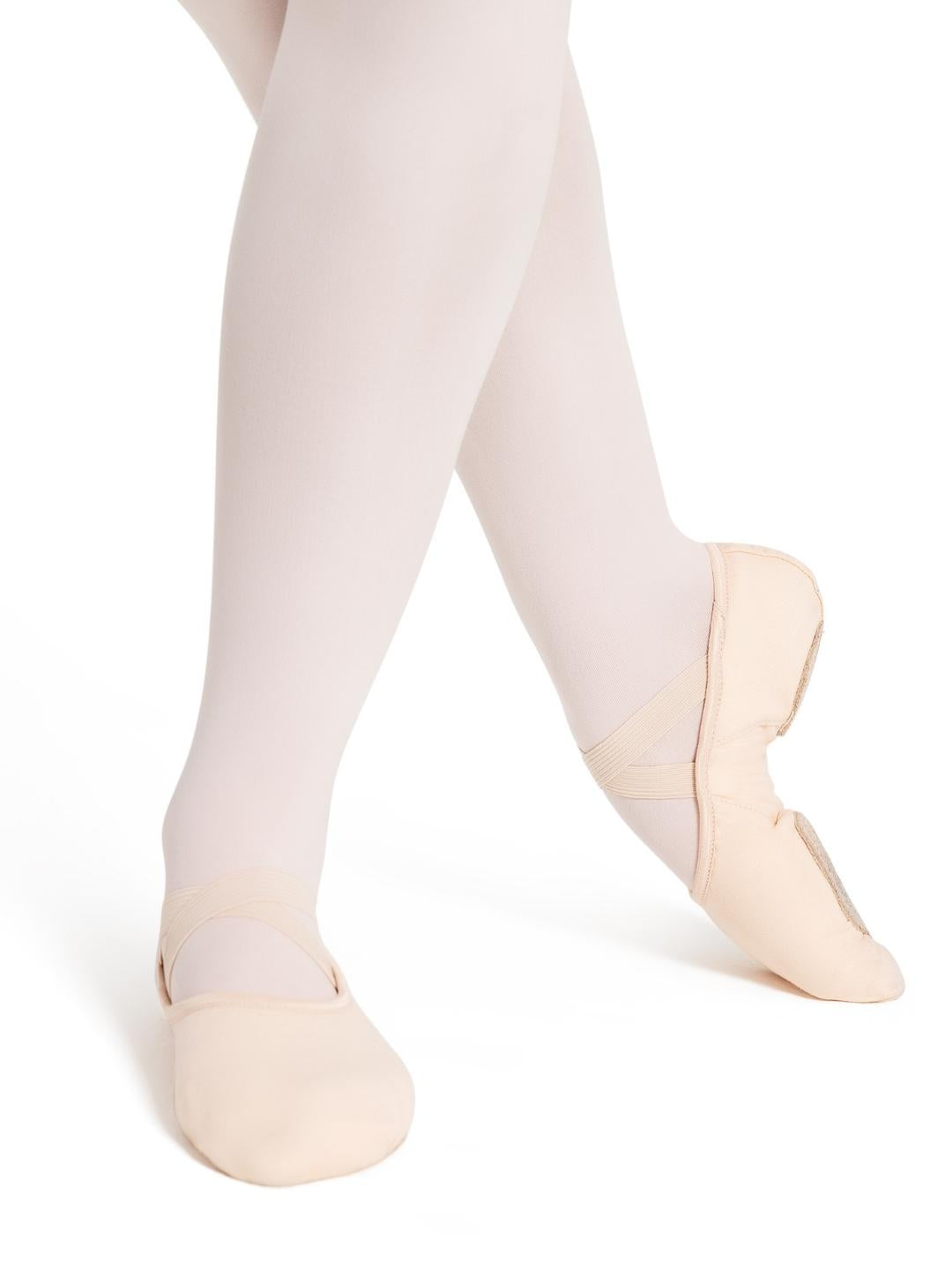


Buying ballet shoes online in Australia does not have to be complicated. With the right information, you can find a well-fitted pair the first time, without the guesswork. This guide covers sole types, sizing, brand differences, and what to prioritise at each stage of training.
Full Sole or Split Sole: Which Ballet Shoe Is Right?
This is the first decision to make, and it matters more than most people realise.
Full sole shoes have leather or canvas running the entire length of the foot. They give beginners feedback about foot placement and help develop arch strength naturally. Most dance teachers recommend full sole for students under ten or anyone in their first year of ballet training.
Split sole shoes have two separate sections of material, one under the ball of the foot and one under the heel. This construction allows the foot to articulate more freely and makes the arch more visible. They suit intermediate and advanced dancers who already have developed foot strength and technique.
If you are unsure which your child needs, ask their teacher before ordering. Most studios have a preference, and it is worth confirming before you purchase.
Leather or Canvas: Understanding the Material Difference
Both materials perform well, but they suit different needs.
Leather ballet shoes are durable, mould to the foot over time, and hold their shape well after repeated wear. They are easy to clean and tend to last longer for students in class multiple times per week.
Canvas shoes are lightweight, breathable, and more affordable. They stretch to fit the foot quickly and are a practical choice for younger students who are still growing. Canvas does not mould as firmly as leather, but many dancers prefer the softer feel.
For a detailed breakdown of how leading brands approach both materials, our comparison of Bloch and Capezio ballet shoes is a useful starting point before you decide.
How to Size Ballet Shoes When Buying Online in Australia
Ballet shoes do not follow standard street shoe sizing. Sizing varies between brands, materials, and sole types. Getting this right is the most important part of buying ballet shoes online in Australia.
General Sizing Guidelines
- Measure both feet and size to the larger foot.
- Most children size down one full size from their street shoe in leather, and half a size in canvas.
- Adults often size down half a size from their street shoe.
- The shoe should fit snugly with no bunching at the toes, and no heel slippage.
- A small amount of growing room is acceptable for children, but too much room affects technique and safety.
Different countries use different sizing conventions, which can cause confusion. If you are comparing options across regions, our guide to finding the right fit across dance levels covers sizing in practical detail and is worth reading before you order.
Checking the Fit Once Your Shoes Arrive
- The drawstring or elastic should sit flat and not dig in.
- When the dancer points their foot, the shoe should follow the line cleanly.
- There should be no excess material bunching at the toe box.
- The heel should not lift away from the foot during a demi-plie.
If the fit is not right, do not push through. An ill-fitting ballet shoe affects how a young dancer learns to use their feet, and can cause discomfort that puts them off class.
Elastic and Drawstring: Getting the Setup Right
Most ballet shoes arrive with a drawstring and either pre-sewn elastic or loose elastic that needs to be attached. For beginners, check whether the elastic is already sewn or whether you need to do it yourself before the first class.
Single elastic across the instep is the standard setup for most students. Some dancers prefer two strands of elastic in a cross pattern for extra support. Ask the teacher what they recommend for their class style and level.
If you are looking at crossover-style options or want to understand how the fit differs from a traditional ballet shoe, our article on crossover versus traditional ballet shoe styles explains the differences clearly.
What to Prioritise at Each Stage of Training
- Beginners (under 10 or first year): Full sole, leather or canvas, correct fit over brand preference.
- Intermediate students: Split sole canvas or leather, brand consistency if the teacher has a recommendation.
- Advanced students: Specific brand and last shape to suit the individual foot, often guided by the teacher or examiner requirements.
Brand loyalty matters less than fit at junior levels. As dancers progress, the fit becomes more technical and specific guidance from a teacher is valuable.
Ready to Shop Ballet Shoes Online
Total Dance stocks a carefully selected range of ballet shoes from trusted brands including Bloch, Capezio, and Energetiks. Sizes cover babies through to adults, in both leather and canvas, full sole and split sole.
Browse our full range of ballet shoes and filter by size, material, and sole type to find the right pair for your dancer's current level and studio requirements.


