

Finding the right ballet dance shoes in NZ takes more thought than most people expect. Sole type, fit, sizing, and material all affect how a dancer moves and develops. Whether you are a dance parent buying a first pair or an adult returning to class, this guide covers what you need to know before you buy.
Understanding Ballet Shoe Types
There are three main sole constructions available for ballet shoes. Each suits a different level and foot type.
- Full sole: A single piece of leather or canvas runs the full length of the shoe. Best for beginners. The resistance helps build intrinsic foot strength during those early years of training.
- Split sole: Two separate sole sections leave the arch exposed. This construction allows the foot to articulate more freely, showing the arch clearly and suiting intermediate to advanced dancers.
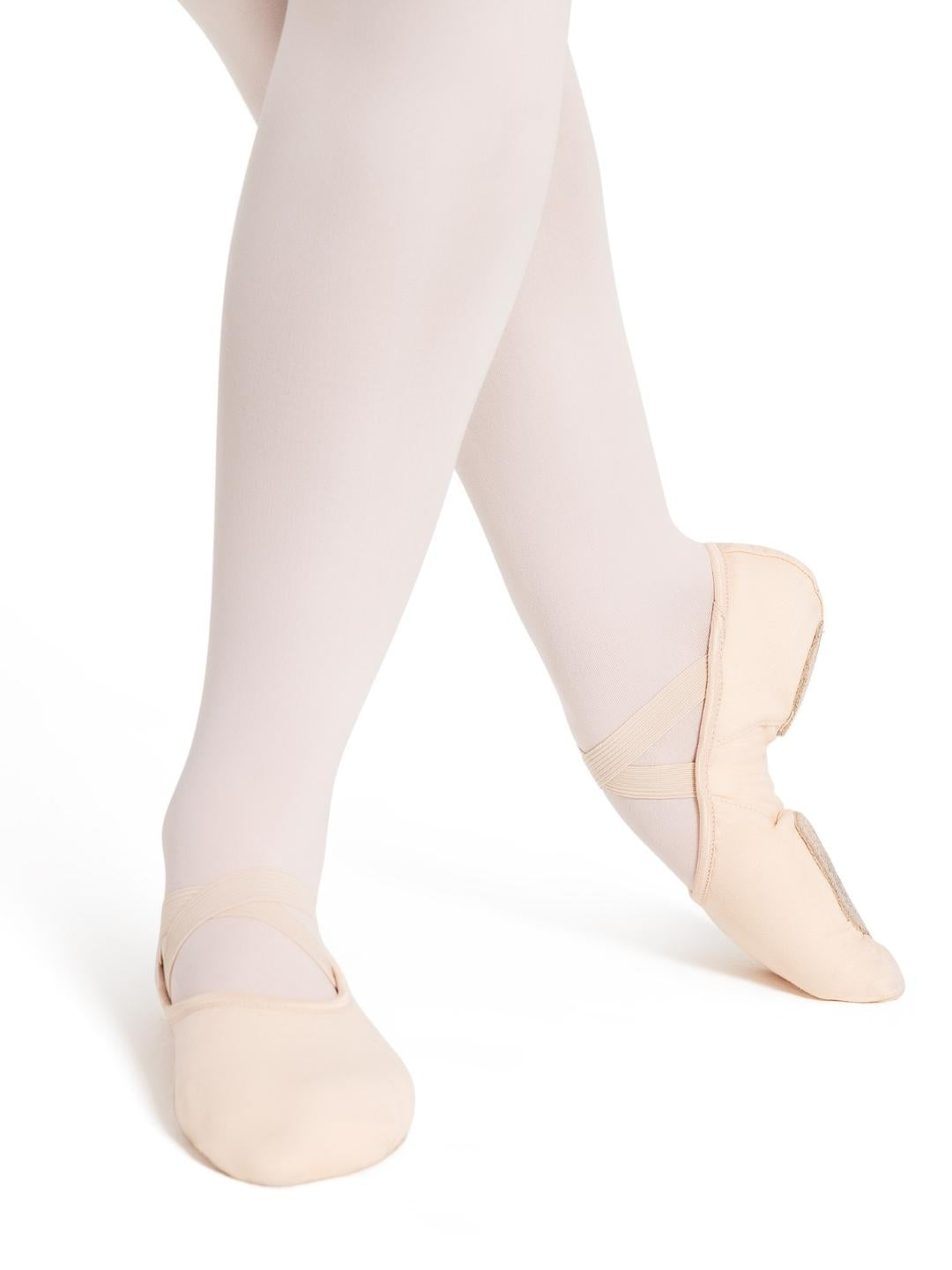
- Elasticated crossover: A hybrid style that wraps around the foot rather than lacing or ribboning closed. If you are comparing styles, our guide on crossover versus traditional ballet shoes breaks down which suits which dancer.
Canvas or Leather: Which Material Works Best
Both materials are widely used in professional and recreational dance. Each has practical advantages depending on the dancer's needs.
Canvas Ballet Shoes
Canvas is lightweight and moulds to the foot quickly. It is easier to wash, dries faster, and is generally more affordable. Most studio teachers accept canvas for class. It does wear through faster than leather on rough studio floors.
Leather Ballet Shoes
Leather is more durable and holds its shape over time. It takes longer to break in but tends to last significantly longer with regular wear. Leather is often preferred for examinations and performances where presentation matters.
For a detailed comparison of two of the most trusted brands available across Australia and NZ, the breakdown of Bloch versus Capezio ballet shoes is worth reading before you decide.
Sizing Ballet Shoes for Young Dancers
Ballet shoe sizing does not follow standard street shoe sizing. This catches many parents off guard at checkout.
- Most brands size ballet shoes 1 to 2 sizes smaller than a child's street shoe size.
- Always measure the foot in centimetres and refer to the specific brand's sizing chart.
- The shoe should fit snugly with no bunching at the toes and no gaps at the heel.
- Avoid buying a size up to grow into. A shoe that is too large compromises technique and can cause the foot to slip inside, increasing the risk of blisters and incorrect alignment.
- Children's feet change quickly. Check the fit every three to four months.
For a thorough walkthrough of sizing across brands and levels, the complete ballet shoes buying guide for NZ dancers covers everything from first class through to pointe preparation.
Sizing Ballet Shoes for Adults
Adult dancers generally size down by one to one and a half sizes from their street shoe. Width is also important. Many brands offer narrow, standard, and wide fittings. If you are between sizes, size down rather than up. The shoe should feel firm but not painful, with the toes lying flat and the drawstring able to pull the throat of the shoe snug without puckering the fabric.
Adults returning to dance after a long break often find their feet have changed width since they last wore ballet shoes. Take a fresh measurement rather than relying on what you remember from years ago.
Elastics and Drawstrings: Getting the Fit Right
Most ballet shoes arrive with the elastic pre-sewn or included loose for attaching at home. Studio teachers often have strong preferences about placement. As a general rule, a single elastic sits diagonally across the arch. Some dancers prefer two elastics in a cross pattern for extra security.
Always tuck the drawstring in after tying. A loose drawstring end is a tripping hazard and is not acceptable in most exams.
Choosing the Right Shoe for the Right Stage
- First year of dance: Full sole canvas or leather. Focus on fit and durability over aesthetics.
- Grade 2 and above: Split sole is appropriate for most students at this stage. Check with your teacher first.
- Exam preparation: Leather is often preferred. Confirm the required colour with your studio. Most require pink for girls and black or white for boys.
- Adult recreational: Split sole canvas is comfortable and practical for most adult class formats.
- Pre-pointe: Your teacher will advise. Some schools keep students in flat shoes until they transition to pointe work. Never purchase pointe shoes without an in-person fitting with a trained fitter.
Shop Ballet Shoes Shipped to NZ
Every order is dispatched tracked from our Melbourne warehouse and ships to New Zealand. You will find a wide selection of styles, sizes, and brands in our full ballet shoes range, including options from Bloch, Capezio, and Energetiks suited to beginners through to advanced dancers.
If you are unsure which style suits your dancer's level, contact our team directly. We are dancers and teachers who can help you get the right fit the first time.


